
Freedom Trail Explorer · The Freedom Trail, Boston, Massachusetts
Freedom Trail Explorer
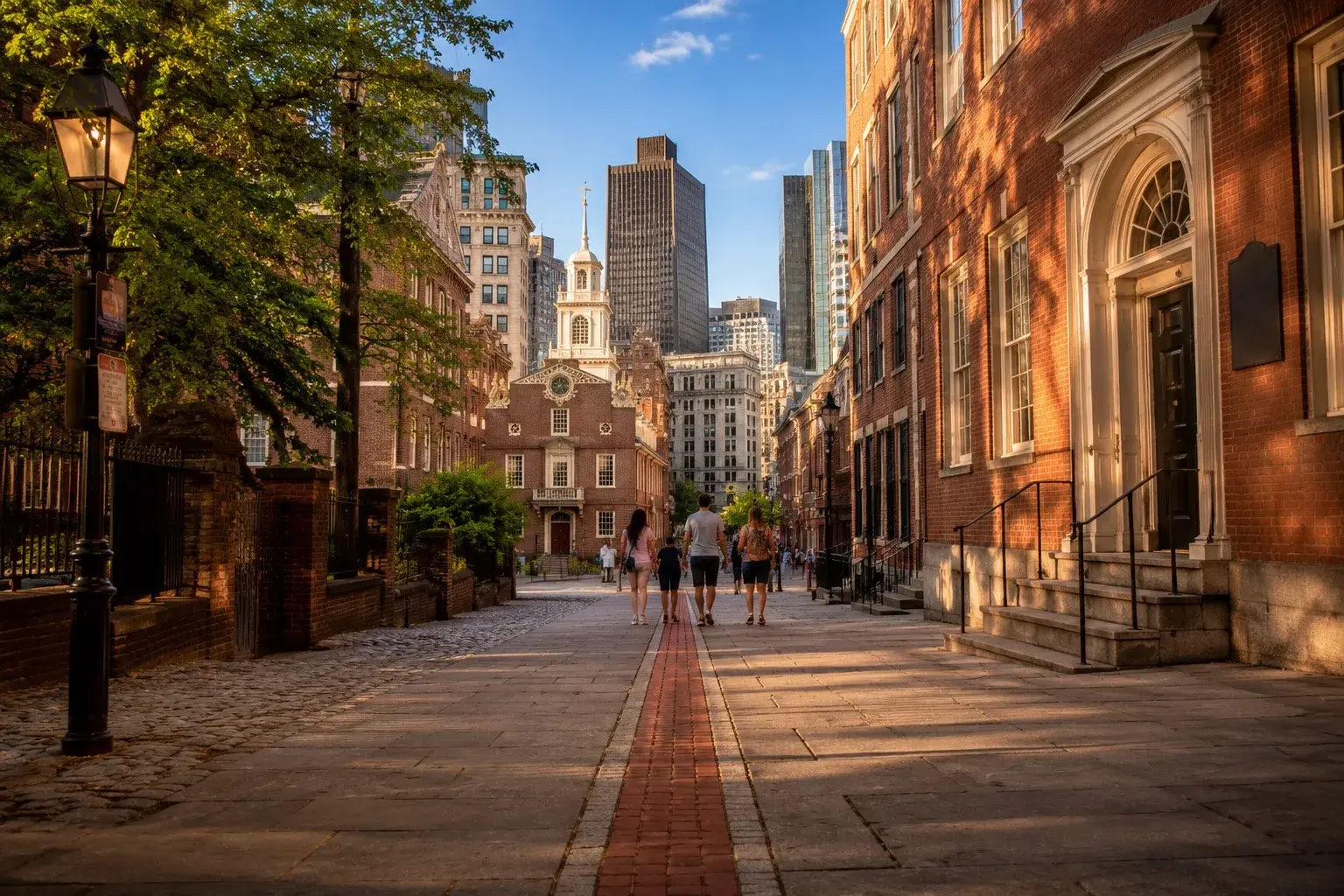
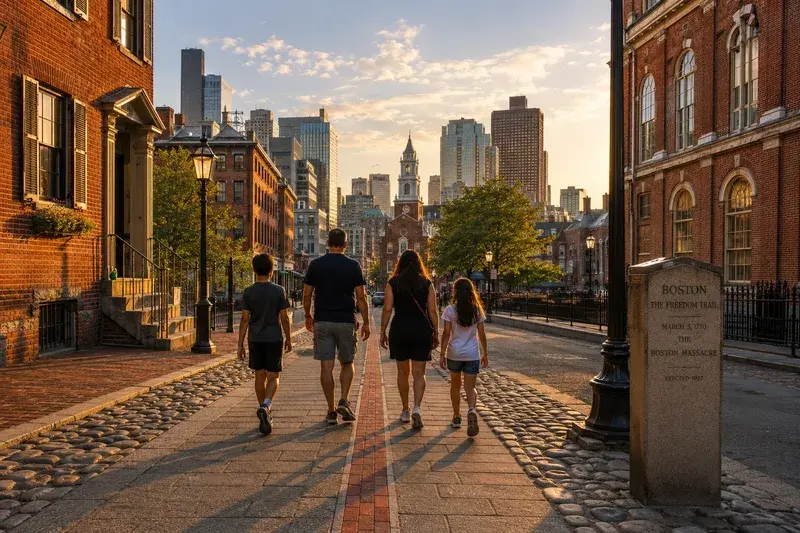
Follow the red brick line through the streets where the American Revolution began — one free adventure across Boston's founding sites.
- 8 missions
- Explore in real life
- Snap the photo
- Learn more if you’re curious
Follow the red brick line laid into Boston's sidewalks and discover the exact places where colonists gathered, protested, organized, and eventually fought back against the most powerful empire in the world.
Adventure Quest is a free download, and the Freedom Trail Explorer collection is free with it — all 1 adventure, no purchase.
- Where
- The Freedom Trail, Boston, Massachusetts
- Time
- 1.5-3 hours
- Missions
- 8 · complete 6 to finish
- Collection
- Freedom Trail Explorer
- Free
- Revolution
- Family
What this adventure explores
- Revolutionary Sites
- Colonial Boston
- Founding Memory
Missions
8 missions at Freedom Trail Explorer
Mission 1
Where It Began
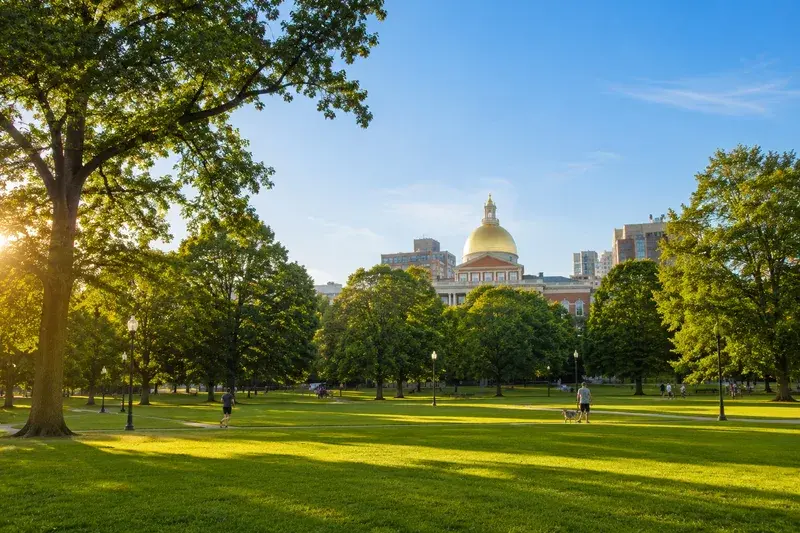
Boston Common is 50 acres of public land that has been the civic heart of Boston since 1634, making it the oldest public park in the United States. The British Army camped here during the occupation of Boston before the Revolution, and it was from this ground that colonists gathered to protest, organize, and eventually fight back against the most powerful military empire in the world. The red brick line you're about to follow was laid in 1951 by a journalist named William Schofield who wanted to connect Boston's Revolutionary sites into a single walkable route — before that the sites existed but no one had thought to link them together.
Mission 2
The Golden Dome
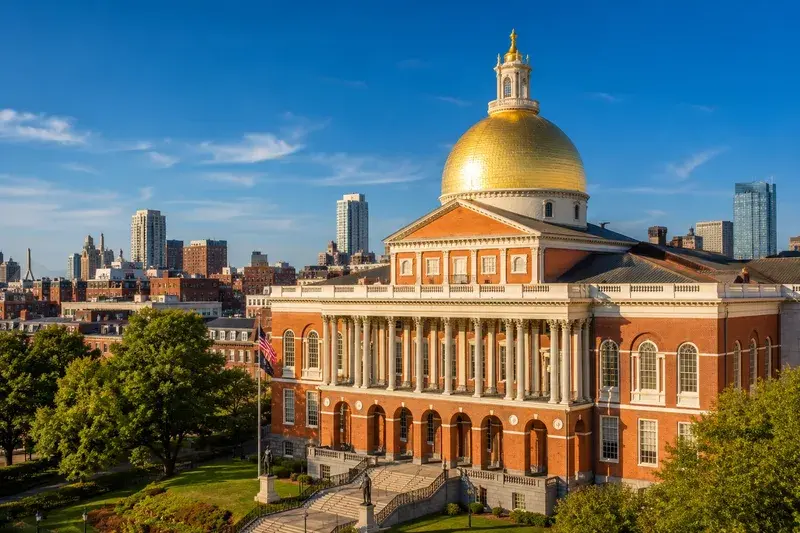
The Massachusetts State House on Beacon Hill was completed in 1798 and its iconic golden dome was originally covered in wooden shingles before being gilded with copper and then gold leaf — the same gold leaf that covers it today. Paul Revere's copper company provided the original copper sheathing in 1802, making this building a direct connection between two of Boston's most famous Revolutionary figures. During World War II the dome was painted grey to make it less visible to potential enemy aircraft.
Mission 3
Granary Burying Ground
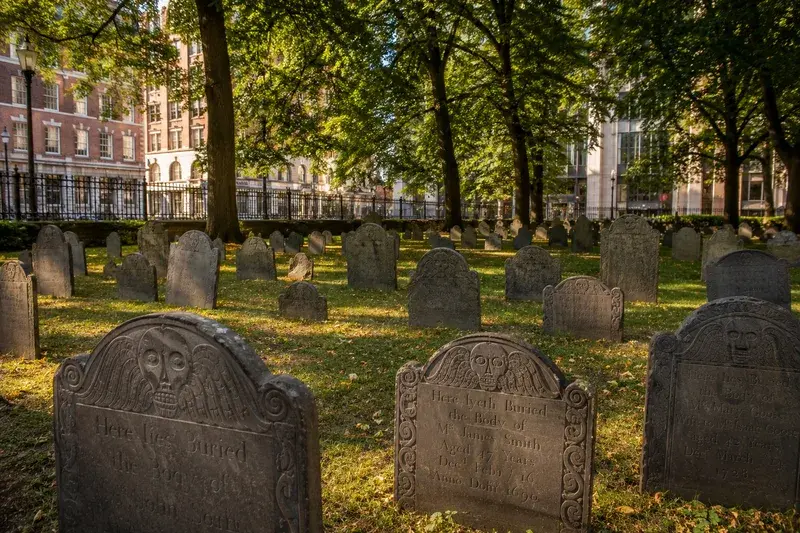
The Granary Burying Ground established in 1660 holds some of the most significant graves in American history — Paul Revere, Samuel Adams, John Hancock, and the victims of the Boston Massacre are all buried here within a few feet of each other. The headstones are among the finest examples of colonial gravestone carving in America — winged skulls, hourglasses, and crossed bones were the standard decorative vocabulary of Puritan New England, reminders that death was always close and life was temporary.
Mission 4
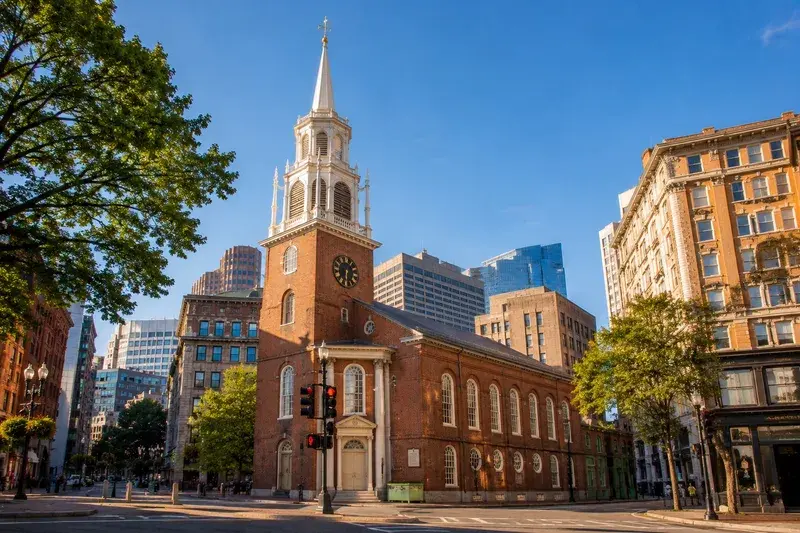
The Old South Meeting House
The Old South Meeting House was the largest building in colonial Boston and the site of the meeting on December 16, 1773 that directly preceded the Boston Tea Party — over 5,000 colonists packed inside when Samuel Adams gave the signal that launched the most famous act of colonial protest in American history. The building later served as a British riding school during the occupation of Boston — the pews were ripped out and the floor covered in dirt.
Mission 5
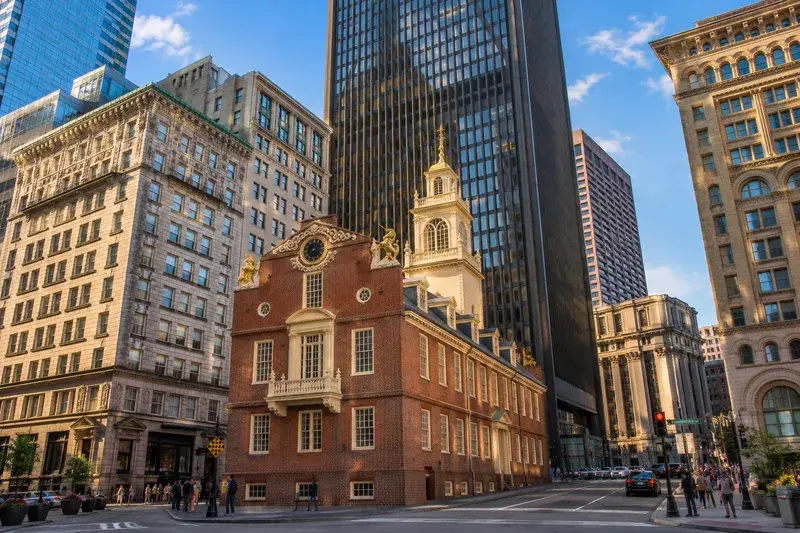
The Old State House
The Old State House, built in 1713, is the oldest surviving public building in Boston and the site where the Declaration of Independence was first read to Boston's citizens on July 18, 1776. The lion and unicorn that still decorate its roofline are replicas of the British royal symbols that were torn down and burned by celebrating colonists immediately after that first reading. Standing in front of it today in 2026, you're at the 250th anniversary of that moment.
Mission 6
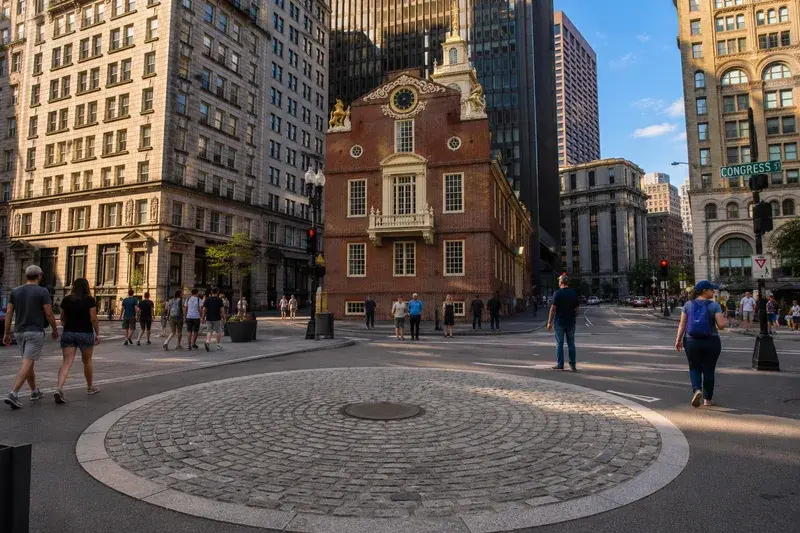
The Boston Massacre Site
A circle of cobblestones embedded in the street in front of the Old State House marks the spot where five colonists were killed by British soldiers on March 5, 1770. Paul Revere's famous engraving of the event turned it into one of the most powerful pieces of propaganda in American history. The trial that followed was defended by John Adams, who secured acquittals for most of the soldiers because he believed even unpopular defendants deserved a fair trial.
Mission 7
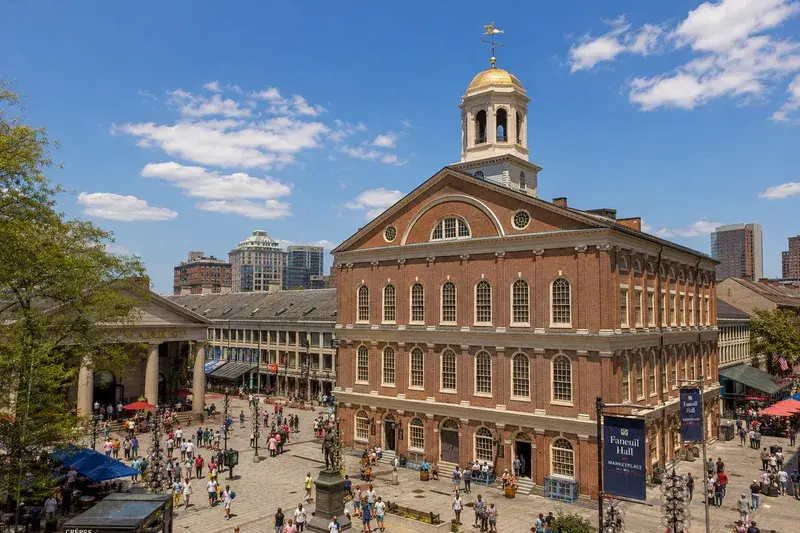
Faneuil Hall
Faneuil Hall has been called the Cradle of Liberty — a meeting hall donated to Boston in 1742 where colonists gathered to debate, protest, and organize their resistance to British rule for decades before the Revolution. The grasshopper weathervane on the roof has been there since 1742 — during the Revolution, sentries would ask strangers what sat on top of Faneuil Hall to confirm they were actual Bostonians and not British spies.
Mission 8
250 Years of Revolution
Walking the Freedom Trail in 2026 means walking through the exact streets where the American Revolution was planned, argued over, and set in motion 250 years ago — the same cobblestones, the same buildings, the same harbor visible at the end of the street. The 56 delegates who signed the Declaration of Independence were, on average, 44 years old — ordinary people with businesses, families, and everything to lose, making a decision that would either create a nation or get them hanged for treason.
Play Freedom Trail Explorer in Adventure Quest.
Freedom Trail Explorer is one of the adventures in the Freedom Trail Explorer collection, in Adventure Quest for iPhone.