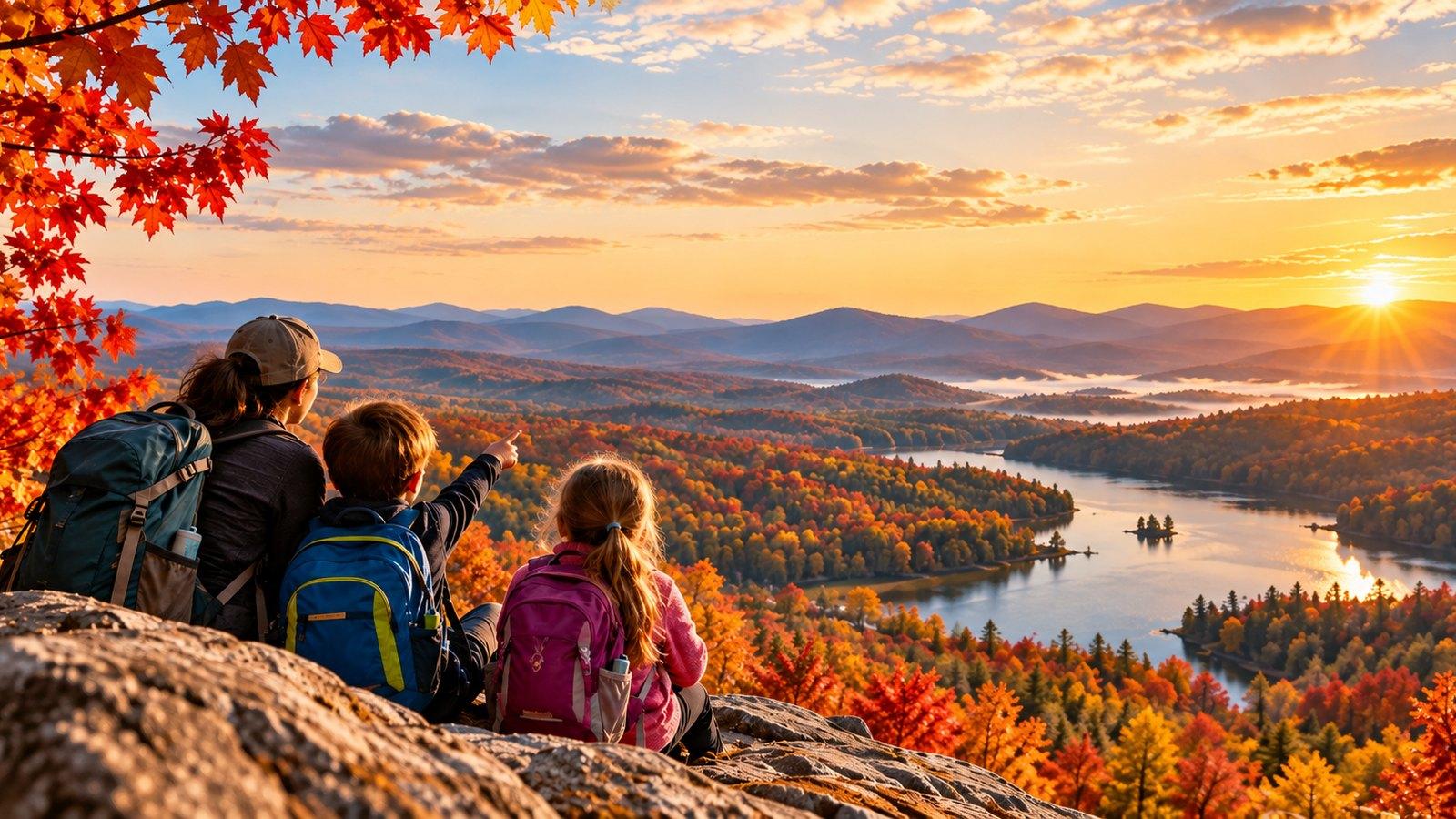
Fall trips with kids work better when the colour is the setting, not the entire plan. A scenic overlook can be beautiful for five minutes. Give a kid a bridge to find, tracks to notice, a cave to enter, a dune to climb or a trail mission to finish, and suddenly the same landscape has a job.
These seven places were chosen for more than foliage. Each one gives families something concrete to do, while leaving room to shorten the day when weather, crowds or energy change the plan.
1. Great Smoky Mountains National Park — find fall moving down the mountain
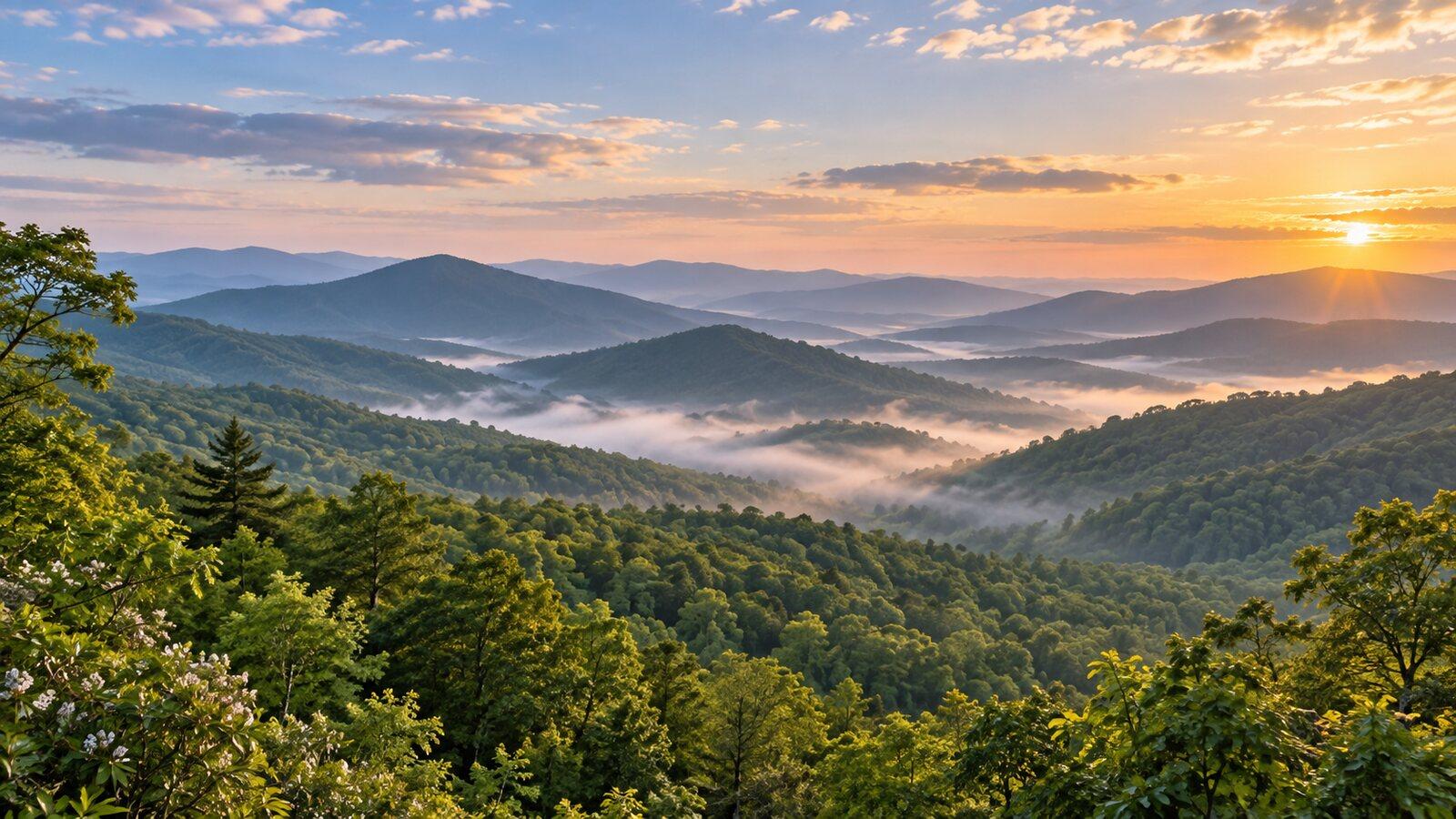
The Smokies do something useful for families who cannot time a trip perfectly: autumn arrives in waves. The National Park Service says colour typically begins at higher elevations and works downward over several weeks. Higher elevations can begin changing in September, while lower and middle elevations commonly develop their strongest colour from mid-October into early November.
The adventure: turn the elevation change into the mission. Pick a short trail or two at different elevations and ask the kids to become fall detectives. Which trees have changed? Which are still green? Can they find red, orange and yellow on the same walk? Add fungi, vines and late wildflowers to the search instead of making leaves the only target.
2. Shenandoah National Park — turn Skyline Drive into a trail quest
Shenandoah gives families an easy way to control the effort. Skyline Drive supplies the big views; the park’s trails supply the adventure. You do not have to choose between an all-day hike and never leaving the car.
The adventure: start with an overlook, then earn the next view on foot. For younger kids or a lower-energy day, the 1.3-mile Limberlost TRACK Trail is built for visitors of different ages and abilities and uses a self-guided activity to explore changes in the forest through senses and imagination. Shenandoah’s Junior Ranger programme is designed around hands-on discovery and is geared toward ages 7 to 12.
3. Acadia National Park — hunt for stone bridges on the carriage roads
Acadia changes the shape of a fall adventure. Here the colour can meet granite, ponds, mountains and the Atlantic, and the family outing does not have to revolve around a summit.
The adventure: explore part of Acadia’s 45 miles of carriage roads and make the stone-faced bridges your targets. Walk or bike and let the kids navigate from feature to feature. If you want a more formal mission, Acadia also offers Junior Ranger activities and family programmes.
4. Sleeping Bear Dunes National Lakeshore — find fall between the dunes and Lake Michigan
Sleeping Bear gives you a fall landscape that does not look like the Appalachians or the New England mountains. Forest colour sits beside huge dunes, farm country and Lake Michigan.
The adventure: do not make the hardest dune climb the requirement. Build a discovery loop around an overlook, a manageable trail and one historic landscape — the North Bar Lake Overlook and the farms of the Port Oneida Rural Historic District are the kind of pairing that works. Ask the kids to find three landscapes in one day: dune, forest and farm, with Lake Michigan as the bonus.
5. Indiana Dunes National Park — follow the clues from forest to beach
Indiana Dunes may be the purest Adventure Quest stop on this list, because the park has already built the bones of the game.
The adventure: take a trail and use the landscape as a clue board. The park’s Junior Ranger activities ask kids to compare leaves, look for animal tracks, notice movement in the trees and sky, and stop to listen to the sounds around them. Another activity follows the ecological succession from Lake Michigan beach to forest.
In October 2026 the park is also running a Super Kids Scavenger Hunt on Wednesdays through Sundays, Miller Woods hikes on Saturdays except 24 October, Chellberg Farm open houses every Saturday, and fall-colour hikes on 24 and 31 October.
6. Cuyahoga Valley National Park — solve the October colour sequence
Cuyahoga Valley is a good choice for families who like to notice things rather than conquer things. Forest, canal history, waterfalls and wildlife all sit inside a landscape where the fall show changes throughout October.
The adventure: make the month itself the clue. Different trees peak at different times. In early October the inner loop of the Oak Hill Trail is a place to look for the reds of maple, the oranges of sassafras and the yellows of white ash and big tooth aspen. Mid-month brings sugar maples and white oaks around Brandywine Falls and the Brandywine Gorge Trail. Later in October the late-turning oaks, hazelnut and witch hazel around the Ledges become the show. Have each kid choose one leaf colour or tree shape to track.
7. Mammoth Cave National Park — go underground, then come back up for fall
Mammoth Cave earns its place because the adventure still works when the weather does not. The leaves are only half the story.
The adventure: make it a two-world day. Explore the cave underground, then come back to the surface for a short fall walk. The Park Service suggests the Heritage Trail to Sunset Point for ridge-top views of the surrounding hillsides, and the park’s Junior Ranger and Junior Cave Scientist programmes give kids another way to turn geology, wildlife and cave science into a mission.
How to choose your fall adventure
Choose the experience before you choose the foliage forecast.
| If you want | Go to |
|---|---|
| Classic Appalachian mountains and a wide range of possible effort | Great Smoky Mountains or Shenandoah |
| Fall with an ocean or a Great Lake beside it | Acadia, Sleeping Bear Dunes or Indiana Dunes |
| An easier day built around noticing, clues and several short stops | Cuyahoga Valley |
| A trip that works even if cold rain arrives | Mammoth Cave |
The goal is not to collect seven perfect fall photos. It is to give the family a reason to walk a little farther, look a little closer and remember what they found.
Before you go
Fall conditions move quickly. Check the managing park’s current alerts, road and trail status, seasonal facility hours and ranger-programme calendar before leaving. For foliage, use current reports as a directional tool rather than a guarantee.
Editorial research: National Park Service official sources, checked 1 October 2026. No firsthand family-completion claims are made in this guide.