
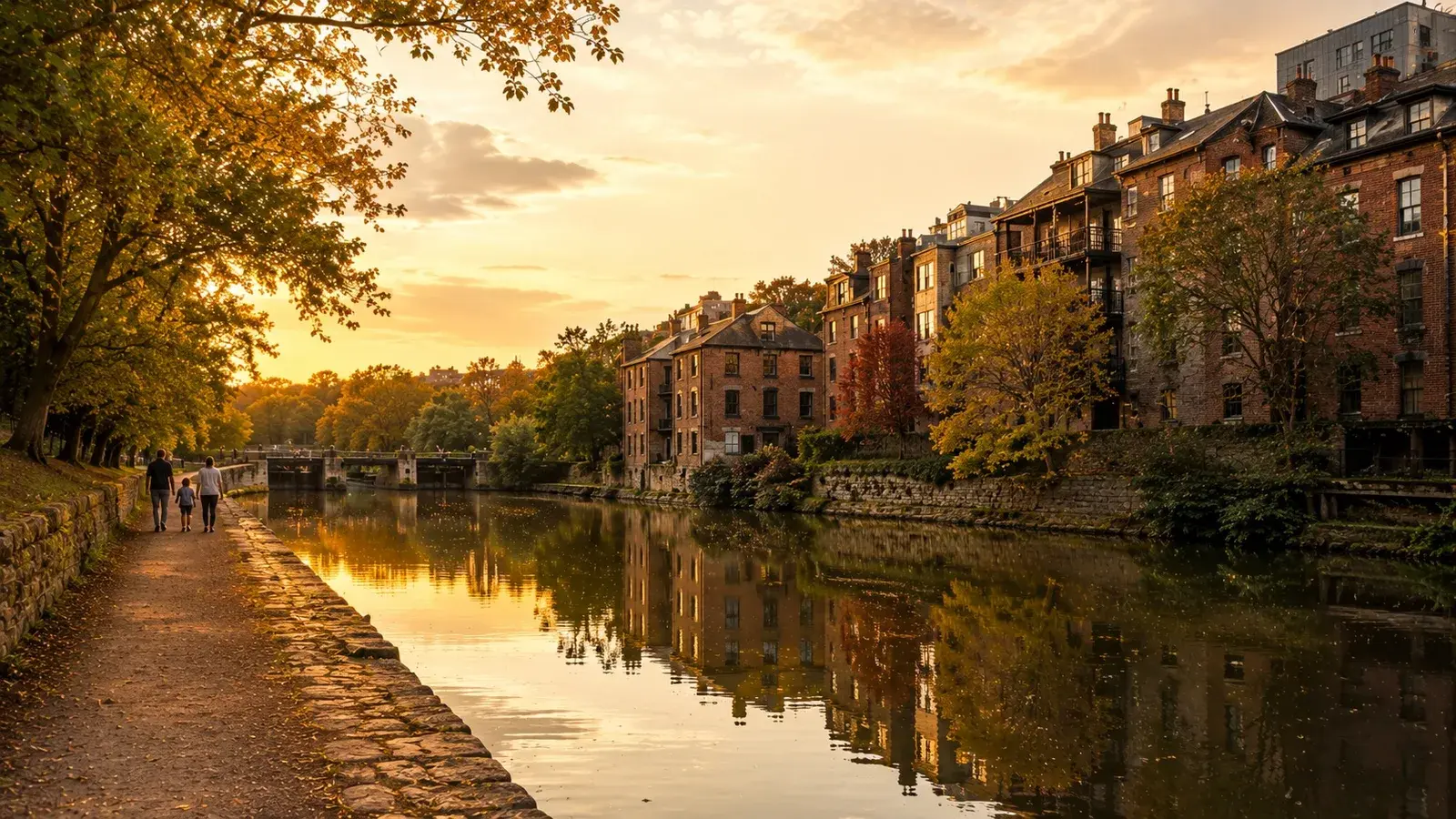
Washington DC · Georgetown, Washington DC — cobblestone streets, canal towpath, and waterfront
Georgetown
Walk Georgetown's cobblestone streets, canal towpath, and waterfront through eight missions connecting America's oldest neighborhood to the nation's 250th anniversary.
- 8 missions
- Explore in real life
- Snap the photo
- Learn more if you’re curious
A Georgetown city-identity adventure built around cobblestone streets, the C&O Canal, Federal-style rowhouses, the waterfront, and the preservation story that saved one of America's oldest neighborhoods.
Adventure Quest is a free download. Unlock the full Washington DC collection — all 5 adventures — for $5.99 in the app.
- Where
- Georgetown, Washington DC — cobblestone streets, canal towpath, and waterfront
- Time
- 45-75 min
- Missions
- 8 · complete 6 to finish
- Collection
- Washington DC
- Neighborhood
- History
What this adventure explores
- Notice the canal, rowhouses, waterfront, and cobblestone details that shaped Georgetown
- Complete any 6 of 8 missions
- Capture one shared Georgetown memory worth keeping
Missions
8 missions at Georgetown
Mission 1
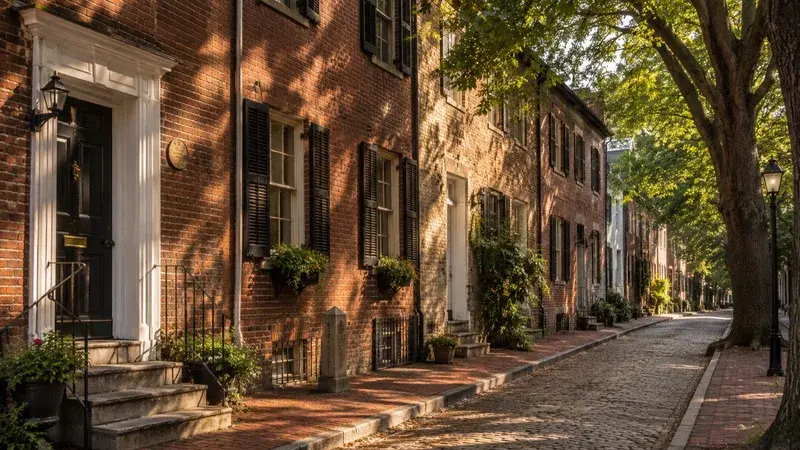
Older Than DC
Georgetown was a thriving tobacco port and merchant town in 1751 — nearly 40 years before Washington DC even existed. When Congress created the new federal capital in 1790, Georgetown was simply folded into it, keeping its name and its streets but losing its independent city charter in 1871. Walking these blocks means walking through a place that was already old when the United States was born.
Mission 2
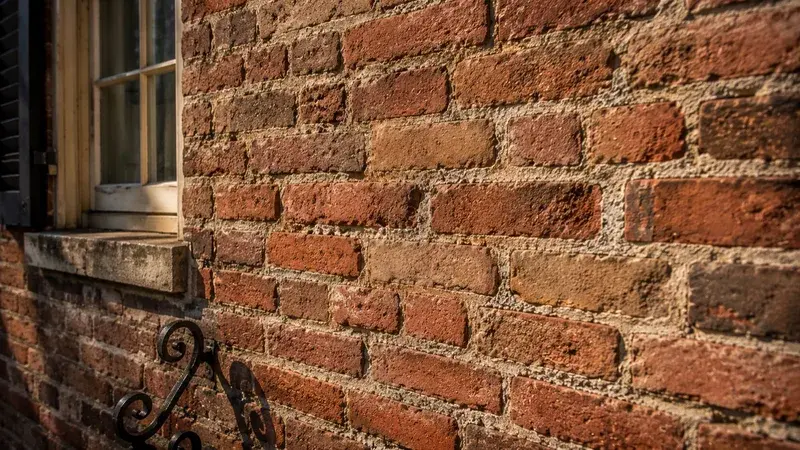
Read the Bricks
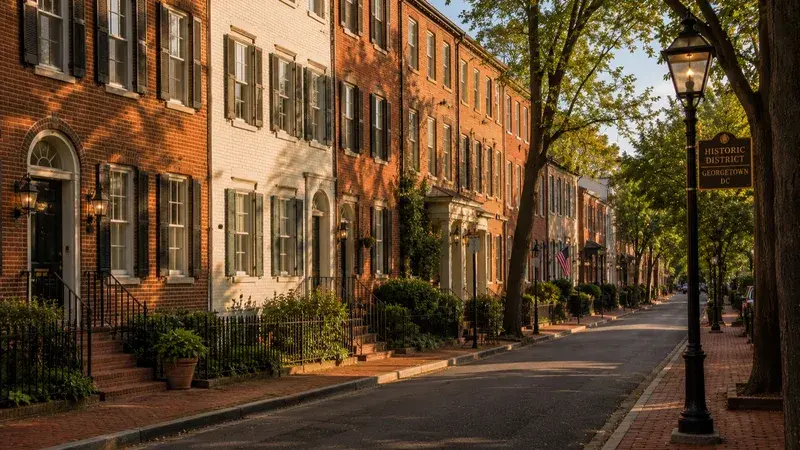
The narrow rowhouses lining N Street and Dumbarton Avenue are textbook Federal-style architecture — flat facades, symmetrical windows, delicate fanlight windows above the doors, and iron boot scrapers still mounted beside the steps. This style dominated American building from roughly 1780 to 1820, favored for its restraint and its echo of classical republican ideals. The details were a statement: the new nation didn't need kings, but it still knew how to build beautifully.
Mission 3
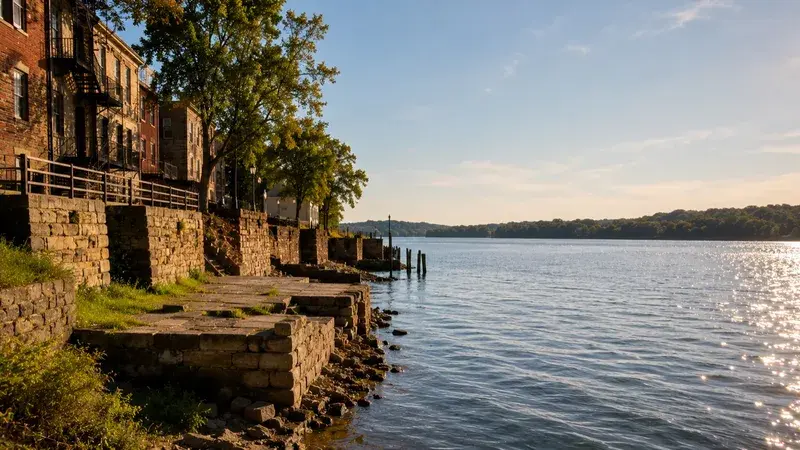
The Tobacco Wharves
In the 1700s, Georgetown's waterfront was one of the most important tobacco shipping points in the American colonies, with merchants sending hogshead barrels of cured leaf downriver to ocean-going ships headed for Britain. The wealthy families who built their fortune here — the Stodderts, the Forrests, the Linthinums — funded the grand houses on the hills above. Today's restaurants and boutiques along the waterfront sit on the same ground where those dock workers once hauled cargo.
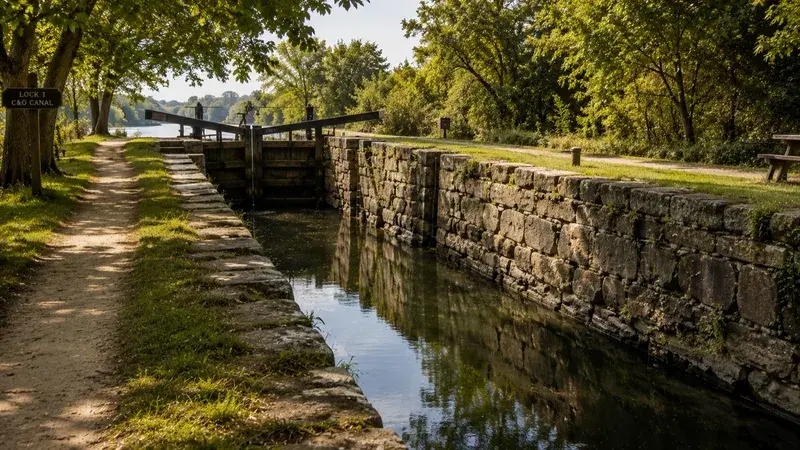
Mission 4
Lock Number One
The C&O Canal stretches 184.5 miles from Georgetown all the way to Cumberland, Maryland, and the Georgetown end is where it begins — or historically, where it ended, delivering goods into the city. Canal boats loaded with coal, flour, and whiskey were raised and lowered between water levels using a system of locks, stone chambers that filled or drained like enormous bathtubs to carry boats uphill through the Appalachians. Construction began in 1828, the same day as the rival Baltimore and Ohio Railroad — and the railroad eventually won.
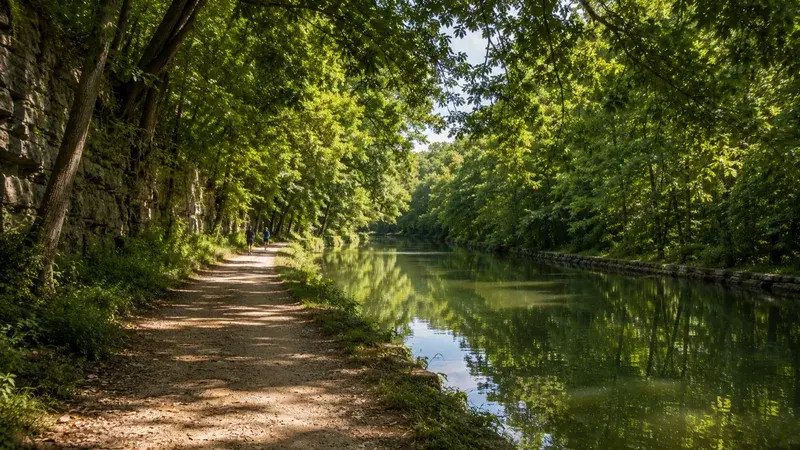
Mission 5
The Mule Path
Canal boats on the C&O didn't have engines — they were pulled by mules walking a towpath alongside the water, connected by a long rope to the bow of the boat. Families often lived aboard their boats year-round, and children sometimes worked as mule drivers, guiding the animals mile after mile while their parents steered. The flat, packed-dirt towpath you can walk today in Georgetown follows the exact route those mules traveled for over a century.
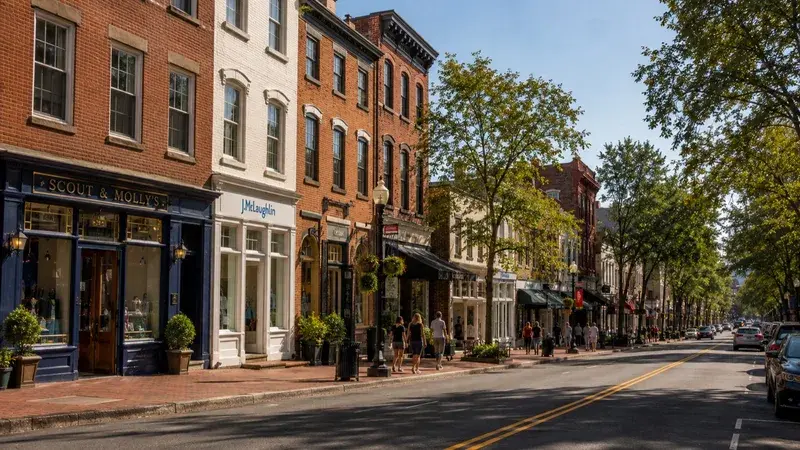
Mission 6
M Street's Market
M Street has been Georgetown's commercial spine since the 18th century, when it served as a main road connecting the port to the broader region — part of what was once called the Great Falls Road heading toward the interior. Merchants sold dry goods, hardware, and imported cloth from the same general corridor where shops and restaurants operate today, though the buildings have been rebuilt and renovated in layers across 250 years. Georgetown's commercial survival is itself a preservation story: it was once slated for urban renewal demolition in the 1950s before historic advocates stepped in.
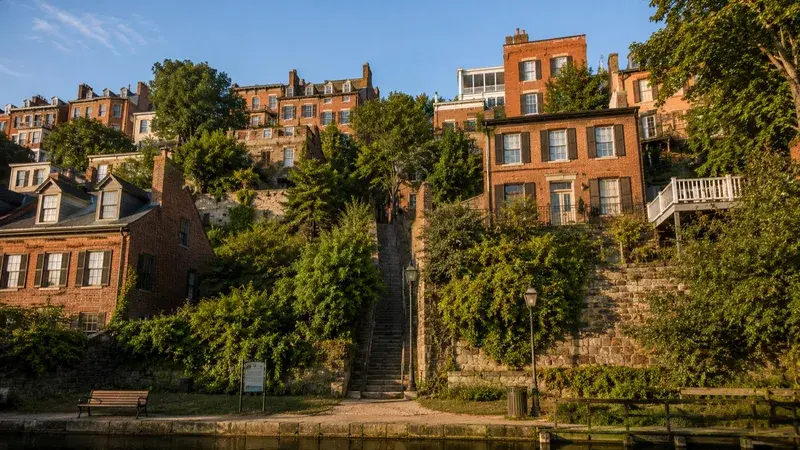
Mission 7
High Street Hill
Wisconsin Avenue climbs steeply away from the canal and waterfront, and the elevation was intentional for Georgetown's elite — wealthy merchants built their finest homes on the high ground above the smell and noise of the docks below. The Dumbarton House, completed around 1800, sits in this upper tier and is one of the best-preserved Federal-period homes in the country, offering a window into how a prosperous Georgetown family actually lived during the early republic. Social hierarchy in early American cities was often literally vertical.
Mission 8
Saved by History
In the 1950s, federal planners proposed routing a major expressway through Georgetown and demolishing swaths of its historic blocks in the name of urban modernization — a fate that erased whole neighborhoods in other American cities. Georgetown residents and preservation advocates fought back successfully, and in 1967 the neighborhood became one of the first in DC to receive historic district protections. The cobblestones, the brick facades, the narrow lots — their survival was not accidental. Someone chose to fight for them.
Play Georgetown in Adventure Quest.
Georgetown is one of the adventures in the Washington DC collection, in Adventure Quest for iPhone.
More in Washington DC
Museum · Science
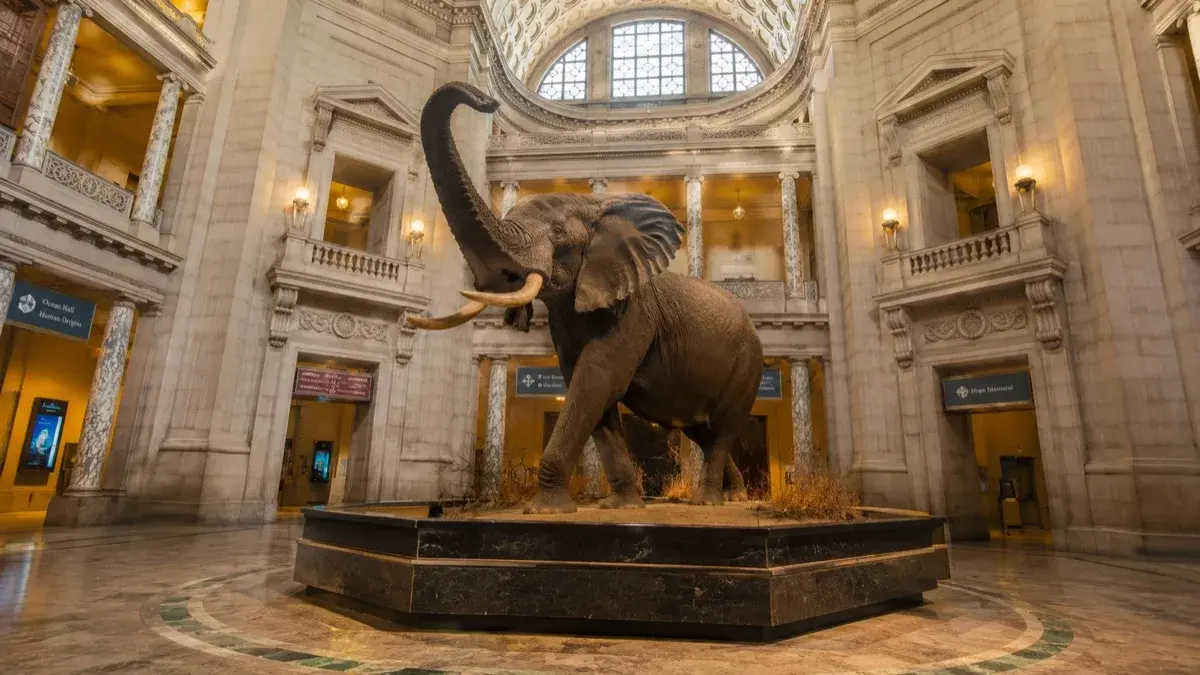
Natural History Museum
Explore the Smithsonian's National Museum of Natural History through eight missions — from Henry the elephant to the Hope Diamond, the Nation's T. rex, and 146 million specimens that tell the story of life on Earth.
8 missions · 60-90 min
Landmarks · America 250
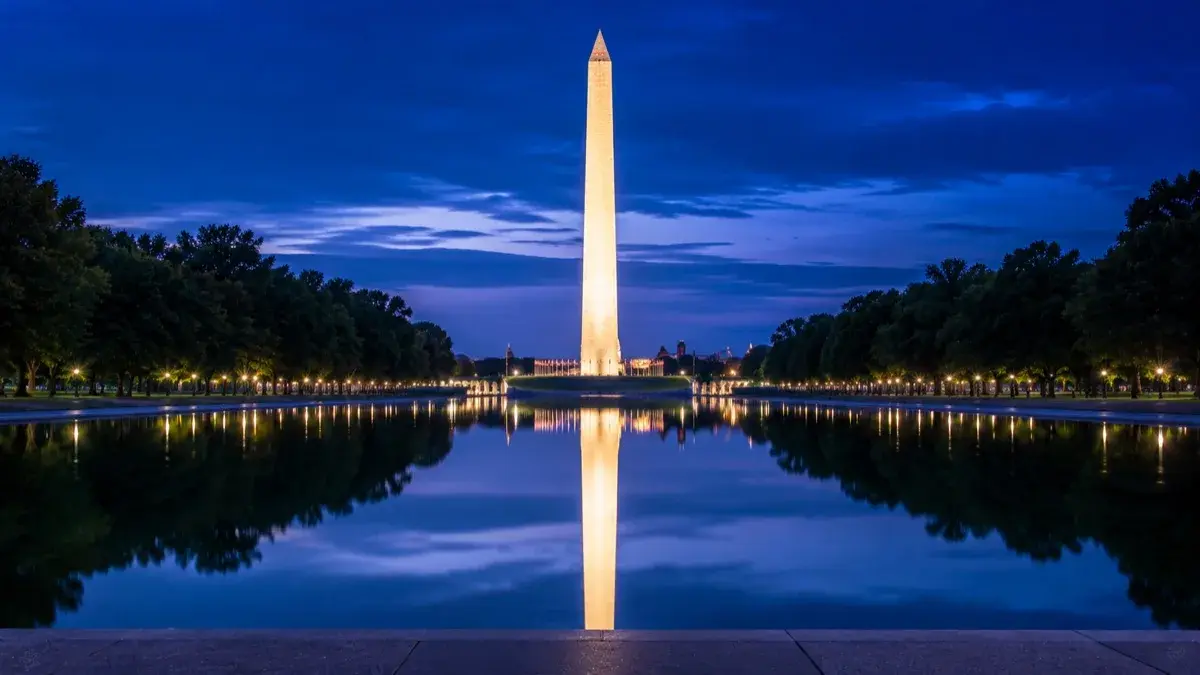
Monuments
Walk the National Mall's monuments — from the Washington Monument to the Lincoln Memorial, Jefferson Memorial, and WWII Memorial — through eight missions connecting America's founding ideals to its 250th anniversary.
8 missions · 60-90 min
Democracy · America 250
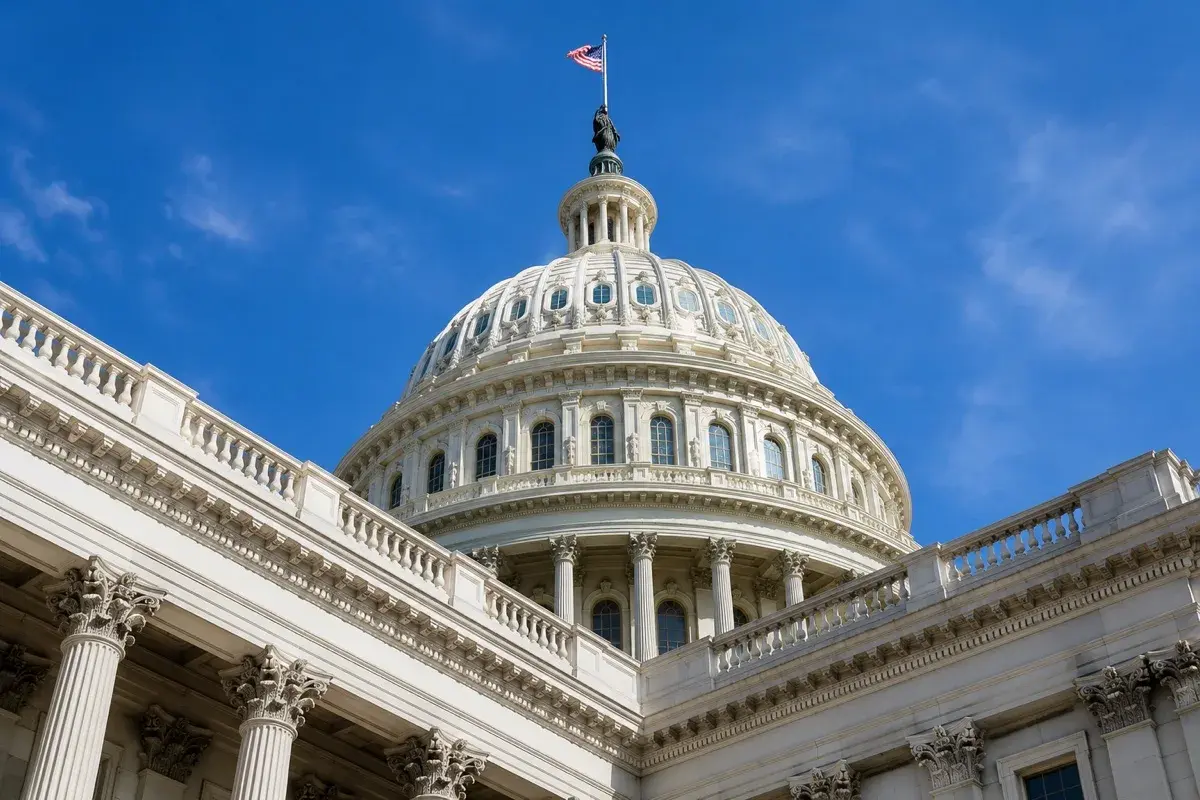
Capitol Hill & Democracy
Explore Capitol Hill through eight missions — the Capitol dome, Congress, the Supreme Court, the Library of Congress, and Eastern Market — connecting the machinery of American democracy to its 250th anniversary.
8 missions · 60-90 min
History · Memorial · America 250
The Mall & Memorials
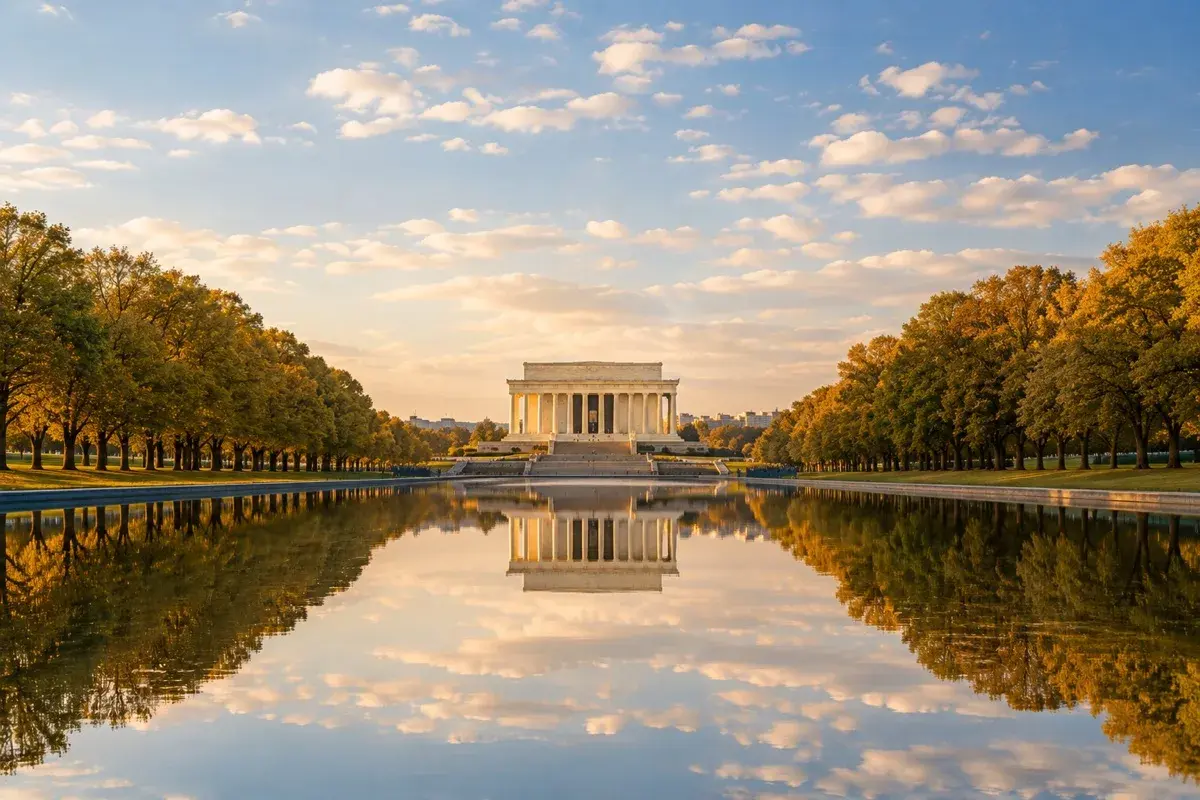
Walk the quieter, more reflective west end of the National Mall through eight missions — the Reflecting Pool, Vietnam Veterans Memorial, Korean War Memorial, MLK Memorial, FDR Memorial, and the Mall itself as America's civic commons on its 250th anniversary.
8 missions · 60-90 min