
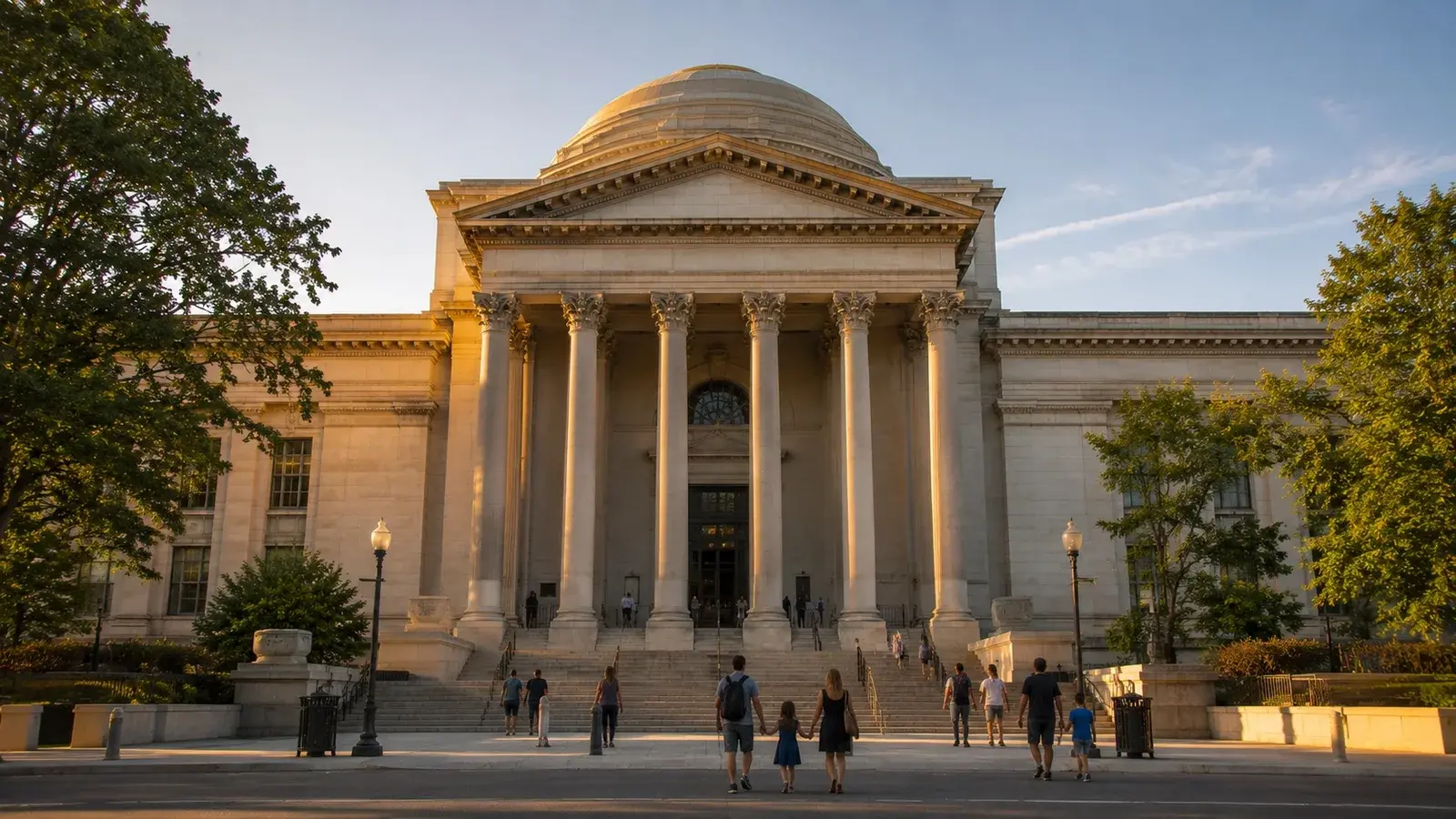
Washington DC · Smithsonian National Museum of Natural History, Washington DC
Natural History Museum
Explore the Smithsonian's National Museum of Natural History through eight missions — from Henry the elephant to the Hope Diamond, the Nation's T. rex, and 146 million specimens that tell the story of life on Earth.
- 8 missions
- Explore in real life
- Snap the photo
- Learn more if you’re curious
A Natural History Museum adventure built around Henry the elephant, the Nation's T. rex, the Hope Diamond, human origins, the Sant Ocean Hall, gems and minerals, insects, and the staggering scale of a collection that holds 146 million specimens.
- Where
- Smithsonian National Museum of Natural History, Washington DC
- Time
- 60-90 min
- Missions
- 8 · complete 6 to finish
- Collection
- Washington DC
- Museum
- Science
What this adventure explores
- Notice the specimens, halls, and stories that span 4.5 billion years of Earth history
- Complete any 6 of 8 missions
- Capture one shared Natural History Museum memory worth keeping
Missions
8 missions at Natural History Museum
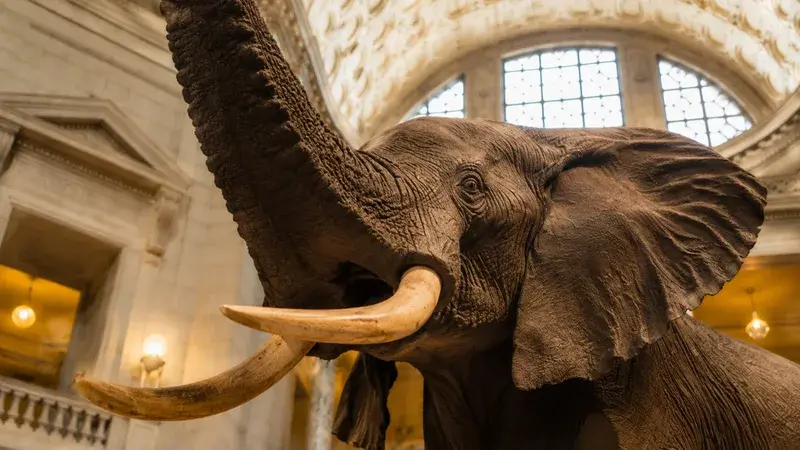
Mission 1
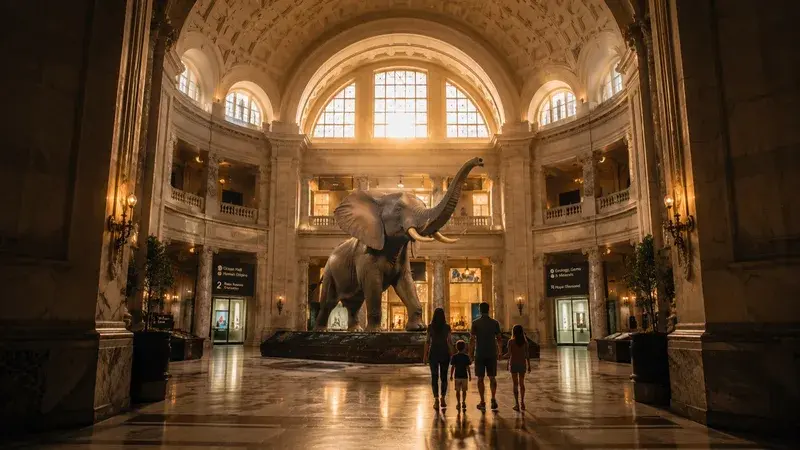
Meet Henry
The African bush elephant standing in the museum's rotunda has a name — Henry — and he's been welcoming visitors since 1959. He's one of the largest mounted elephants ever displayed, standing over 13 feet tall and weighing more than 12 tons before he was preserved. Look up at his tusks and notice how his ears are shaped like the continent of Africa itself.
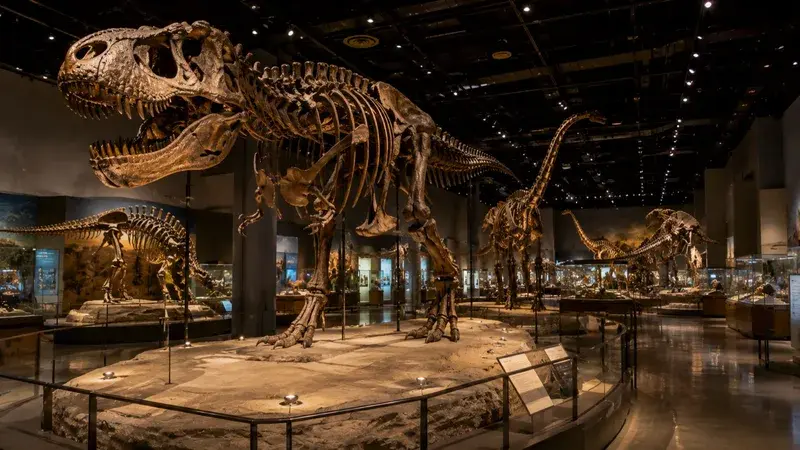
Mission 2
Bones Beneath Us
The Nation's T. rex — one of the most complete Tyrannosaurus rex skeletons ever found — is displayed in the David H. Koch Hall of Fossils, standing in a predatory crouch that reflects how scientists now believe it actually moved. For over a century, T. rex was depicted standing upright like a person, but fossil evidence of its heavy tail and bone structure proved it held its body nearly parallel to the ground. Find a spot where you can see its tiny forearms and imagine what they were actually used for.
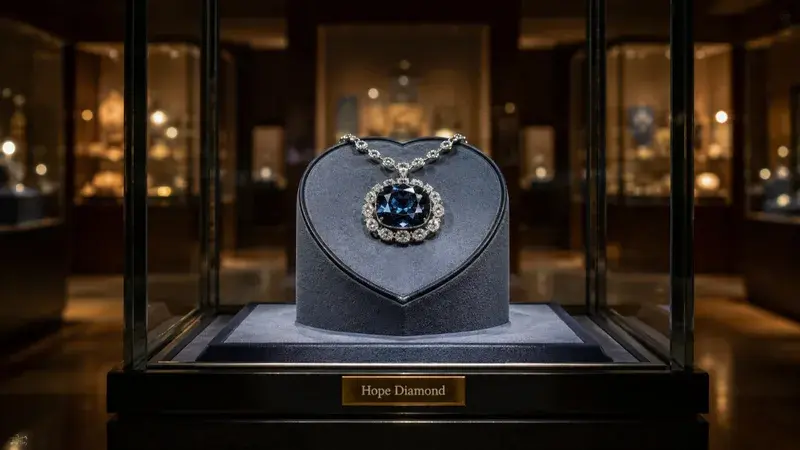
Mission 3
Blue Hope
The Hope Diamond is a 45.52-carat blue diamond — roughly the size of a walnut — and its color comes from trace amounts of boron atoms that replaced carbon deep inside the Earth, more than a billion years ago. It formed roughly 100 miles underground under extreme heat and pressure, then was carried to the surface by a volcanic eruption millions of years later. Under ultraviolet light, it glows an eerie red-orange, a property called phosphorescence that scientists are still working to fully understand.
Mission 4
Our Oldest Relatives
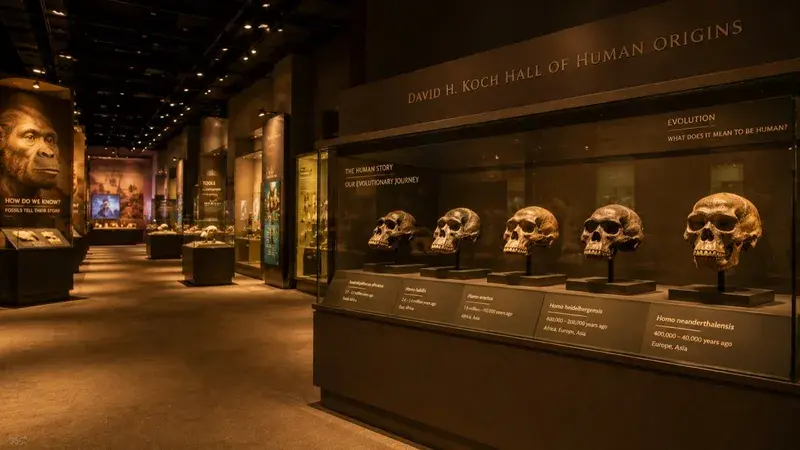
The David H. Koch Hall of Human Origins displays a 3.2-million-year-old skeleton nicknamed "Lucy," a member of the species Australopithecus afarensis discovered in Ethiopia in 1974. She walked upright on two legs — just like us — but had a brain roughly one-third the size of a modern human's, showing that bipedalism came before big brains in our evolutionary story. Stand next to the life-size reconstructions and notice how different, and yet how familiar, your early ancestors look.
Mission 5
Deep Ocean World
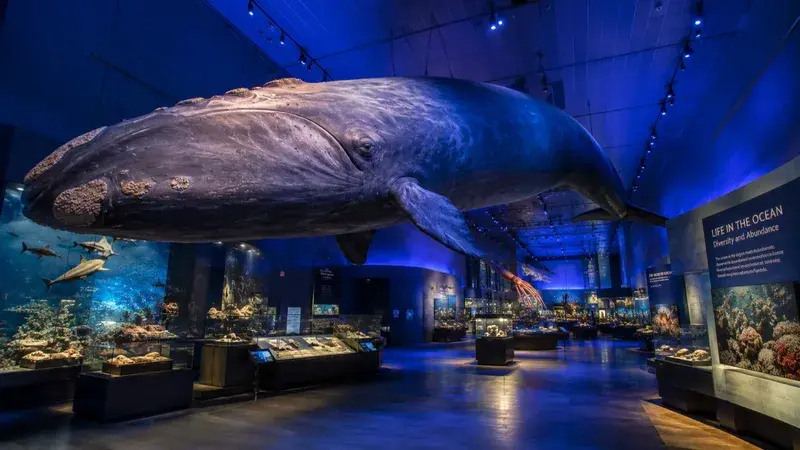
The Sant Ocean Hall is home to a 45-foot-long model of a North Atlantic right whale named Phoenix, suspended from the ceiling as she appeared in life — and she's a real whale, documented by researchers who tracked her for decades. The hall covers more than 23,000 square feet and explores an ocean that covers 71% of Earth's surface, most of which remains unmapped and unexplored. Look for the display showing how pressure, temperature, and light change as you descend deeper — conditions that force deep-sea creatures into extraordinary adaptations.
Mission 6
Rock Detectives
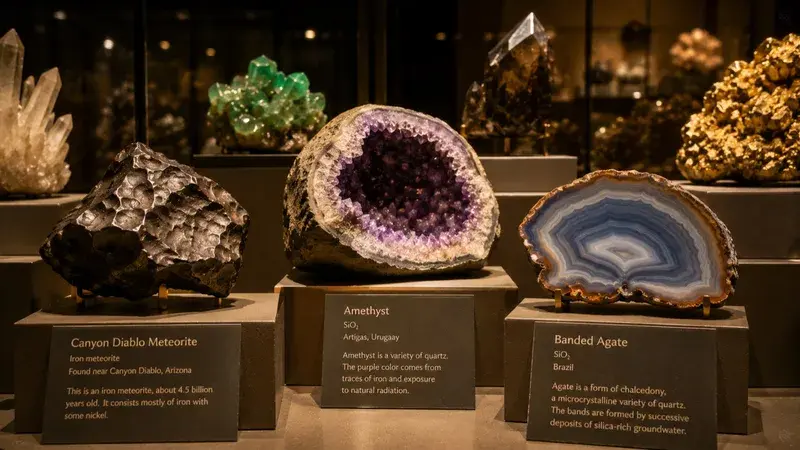
The Janet Annenberg Hooker Hall of Geology, Gems, and Minerals holds more than 350,000 mineral specimens, including one of the world's finest collections of crystals, meteorites, and gemstones. Meteorites on display here are older than Earth itself — some date back 4.5 billion years, to the formation of our solar system — and contain minerals that formed in the atmospheres of dying stars. Look closely at the cut surfaces of geodes and notice how a plain-looking rock can hide an interior that looks like a cathedral made of crystal.
Mission 7
Insect Universe
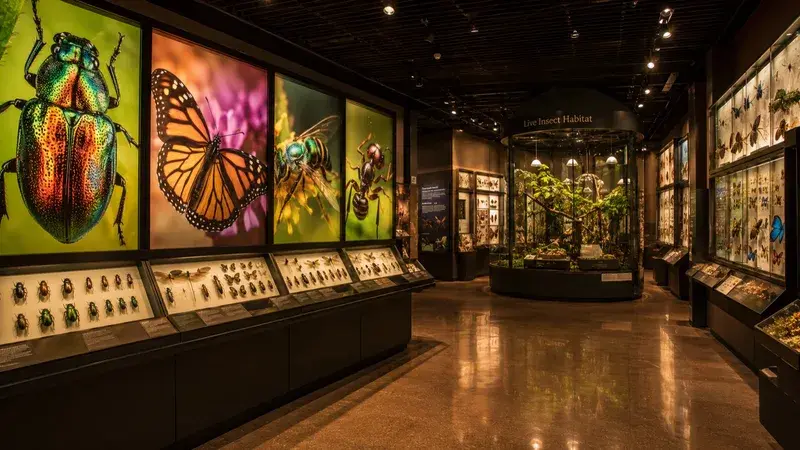
The O. Orkin Insect Zoo houses live colonies of leaf-cutter ants, tarantulas, hissing cockroaches, and other arthropods, and it offers one of the only places in DC where you can hold a living insect under expert supervision. Insects make up more than half of all known animal species on Earth, and scientists estimate there are roughly 10 quintillion individual insects alive at any given moment — that's 10 followed by 18 zeros. Watch the leaf-cutter ants at work and notice how they don't eat the leaves — they use them to grow a specific fungus that the entire colony feeds on.
Mission 8
Living Planet
Before you leave, find a quiet spot and look at the museum building itself — opened in 1910, it was designed to hold the entire natural world, and today its collections contain more than 146 million specimens, making it one of the largest natural history collections on Earth. Only a fraction of those objects are ever on display; the rest are stored in research facilities used by scientists from around the world to study everything from climate change to extinct species. What you've walked through today is less than 1% of what this building actually holds.
Play Natural History Museum in Adventure Quest.
Natural History Museum is one of the adventures in the Washington DC collection, in Adventure Quest for iPhone.
More in Washington DC
Neighborhood · History
Georgetown
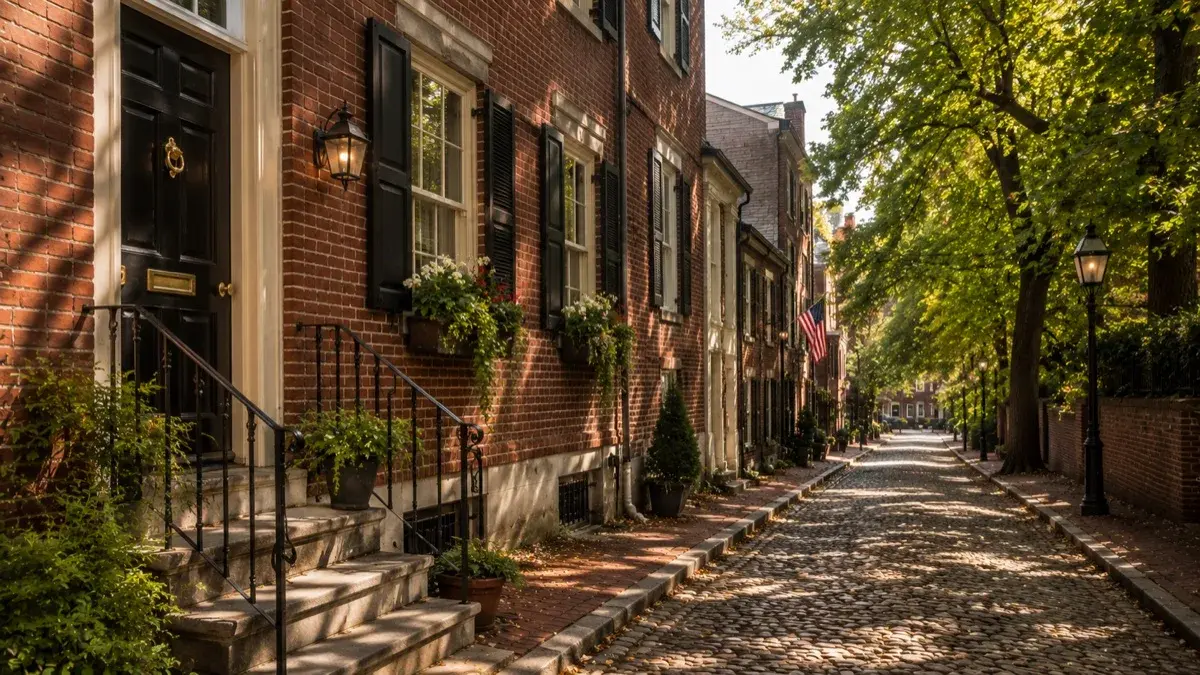
Walk Georgetown's cobblestone streets, canal towpath, and waterfront through eight missions connecting America's oldest neighborhood to the nation's 250th anniversary.
8 missions · 45-75 min
Landmarks · America 250
Monuments
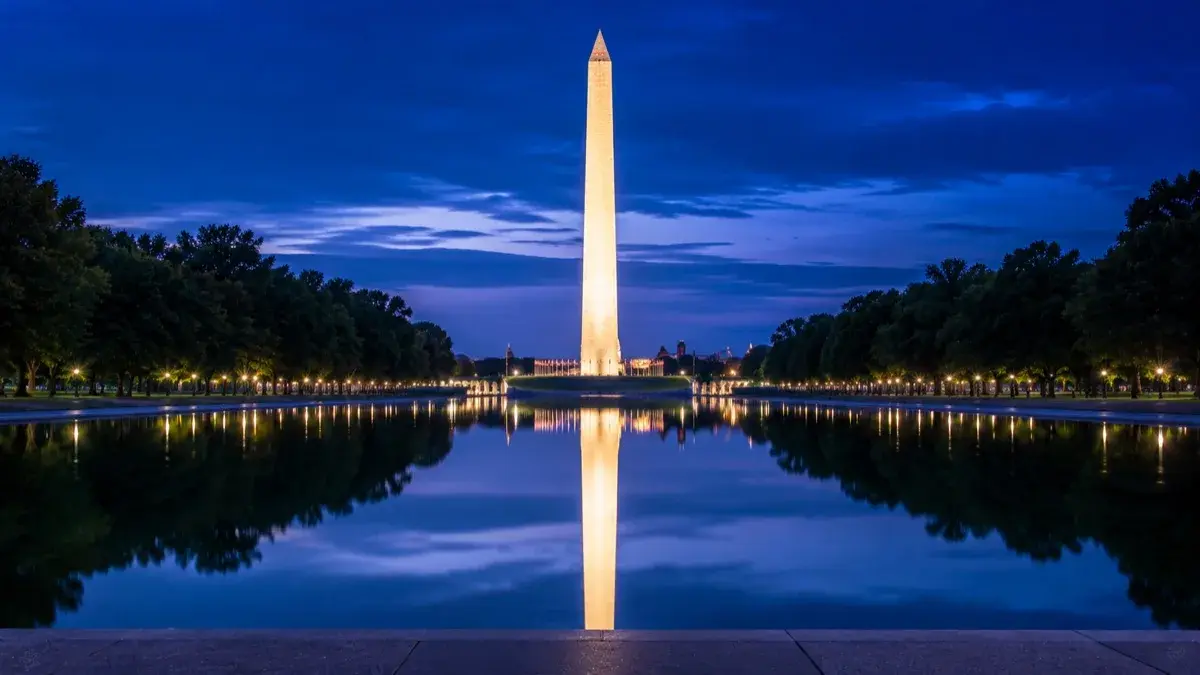
Walk the National Mall's monuments — from the Washington Monument to the Lincoln Memorial, Jefferson Memorial, and WWII Memorial — through eight missions connecting America's founding ideals to its 250th anniversary.
8 missions · 60-90 min

Democracy · America 250
Capitol Hill & Democracy
Explore Capitol Hill through eight missions — the Capitol dome, Congress, the Supreme Court, the Library of Congress, and Eastern Market — connecting the machinery of American democracy to its 250th anniversary.
8 missions · 60-90 min

History · Memorial · America 250
The Mall & Memorials
Walk the quieter, more reflective west end of the National Mall through eight missions — the Reflecting Pool, Vietnam Veterans Memorial, Korean War Memorial, MLK Memorial, FDR Memorial, and the Mall itself as America's civic commons on its 250th anniversary.
8 missions · 60-90 min