
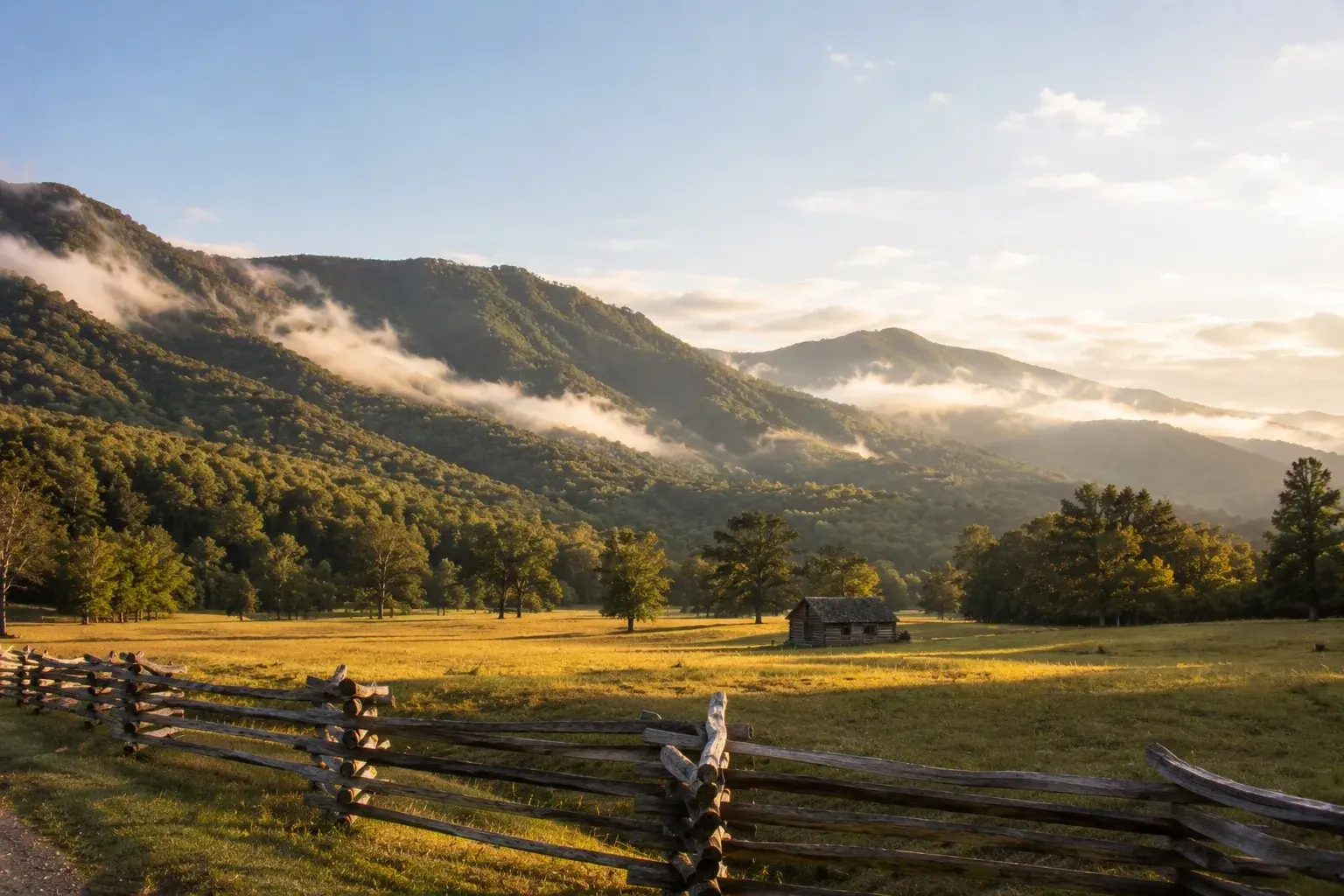
Smoky Mountains · Cades Cove Loop Road, Great Smoky Mountains National Park, Tennessee
Cades Cove Loop
Drive the most visited loop in America's most visited national park — 11 miles of pioneer homesteads, three historic churches, a working grist mill, and wildlife around every bend.
- 8 missions
- Explore in real life
- Snap the photo
- Learn more if you’re curious
A Cades Cove adventure built around pioneer settlement history, Appalachian geology, displaced communities, American chestnut ecology, and the open meadow wildlife habitat that makes this the most-visited loop in the most-visited national park in America.
- Where
- Cades Cove Loop Road, Great Smoky Mountains National Park, Tennessee
- Time
- 2-4 hours
- Missions
- 8 · complete 6 to finish
- Collection
- Smoky Mountains
- Pioneer History
- Wildlife
- First Free
What this adventure explores
- Observe the pioneer structures, open meadow wildlife, and geological features that define the cove
- Complete any 6 of 8 missions
- Capture one shared Cades Cove memory worth keeping
Missions
8 missions at Cades Cove Loop
Mission 1
Oldest Cove
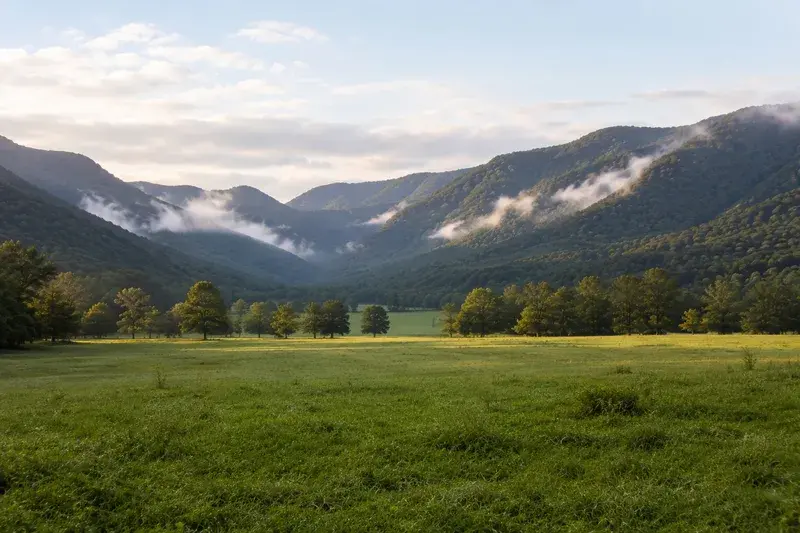
Cades Cove was one of the first areas settled by European Americans in what would become the Great Smoky Mountains — families began arriving here as early as the 1820s, drawn by the rare flat valley floor surrounded by protective mountain ridges. The cove sits in a geological anomaly called a fenster, where erosion has worn through an older rock layer to expose younger limestone beneath, creating the fertile soil that made farming possible. That same geology is why the meadows stay open and why wildlife congregates here in such visible numbers today.
Mission 2
John Oliver Cabin
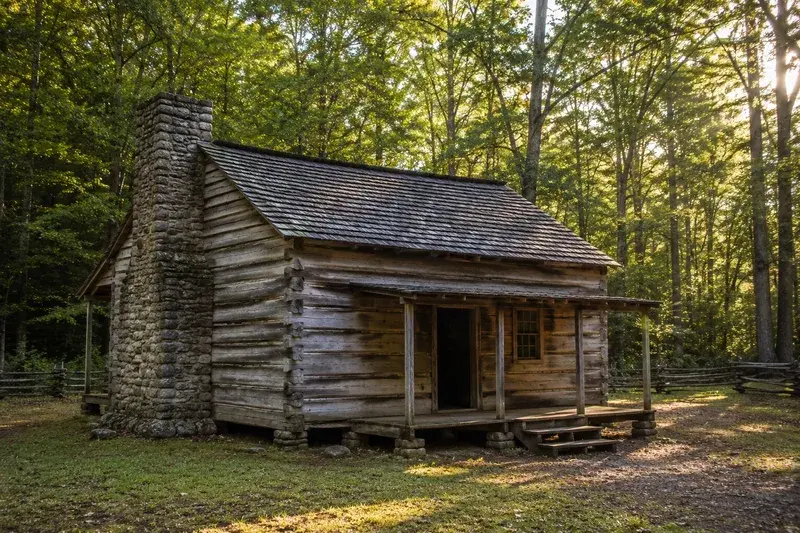
The John Oliver Cabin, built around 1820, is one of the oldest intact log structures in the entire national park — hand-hewn from American chestnut logs by one of the cove's first permanent settlers. John Oliver and his wife Lurena arrived with almost nothing and spent their first winter in a temporary lean-to shelter while building this home, surviving on food provided by Cherokee neighbors. The dovetail notching at the cabin's corners was a precise carpentry technique that locked the logs together without nails, creating walls strong enough to stand for over 200 years.
Mission 3
Three Churches
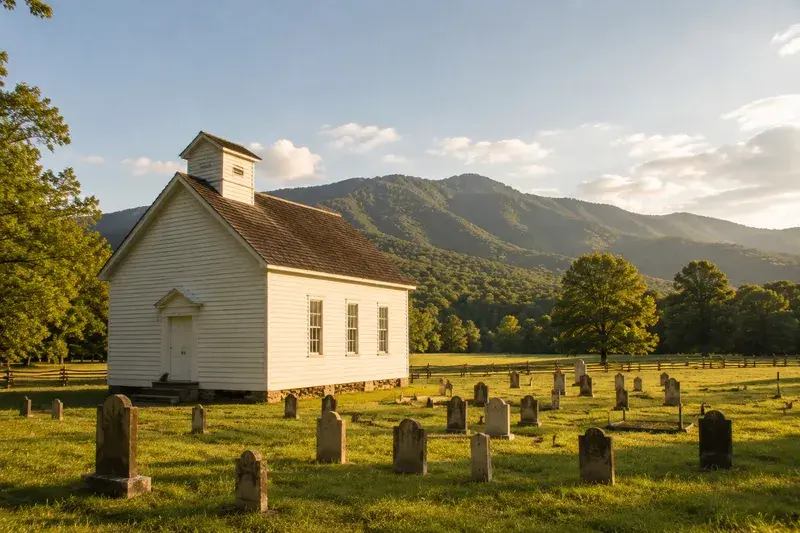
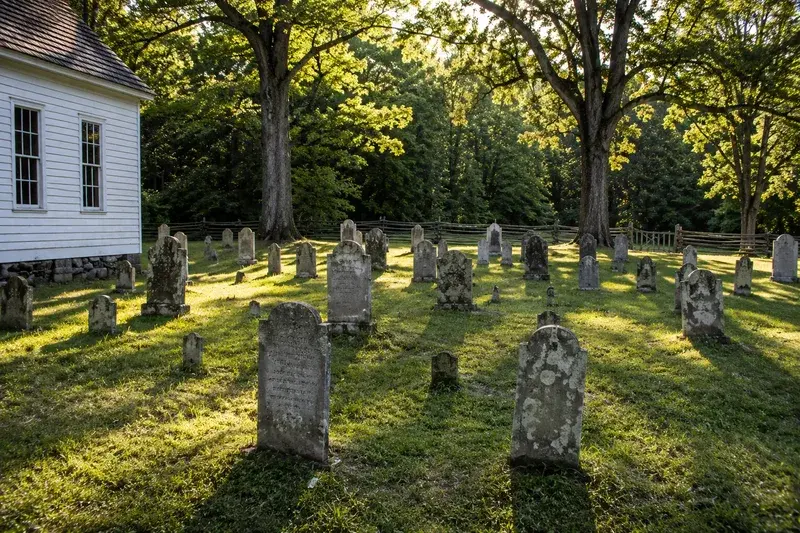
Three historic churches stand within Cades Cove — Primitive Baptist, Methodist, and Missionary Baptist — and their presence tells a story about how frontier communities organized themselves around faith, disagreement, and independence. The Primitive Baptist Church, built in 1887, still holds one of the cove's original cemeteries, where headstones mark families who farmed this valley for generations before the park displaced them. The fact that three separate congregations existed in one small valley reflects how seriously these communities took theological differences that might seem minor today.
Mission 4
Grist Mill Still Running
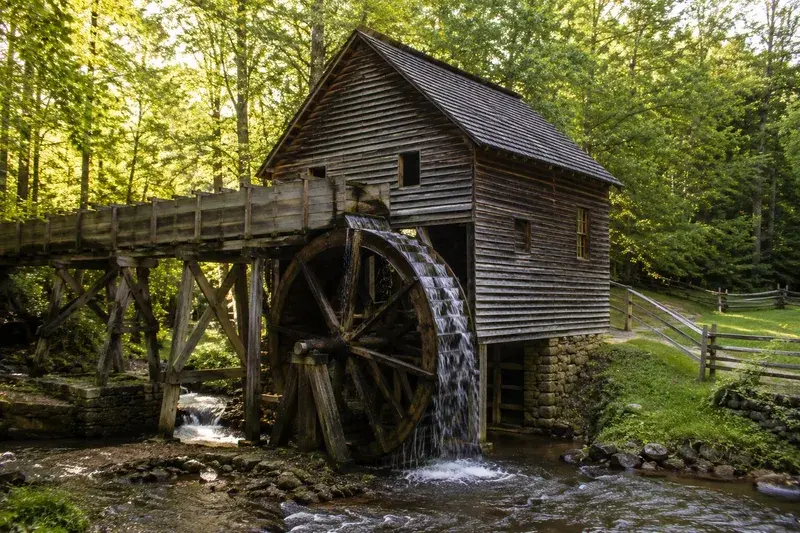
The Cable Mill, built in the 1870s, is a fully functioning water-powered grist mill that still grinds corn into meal using the same basic technology that sustained cove families for over a century. Water diverted from Forge Creek spins an overshot wheel, which turns heavy millstones that grind dried corn between them — a process that could produce enough cornmeal in a day to feed a family for weeks. Corn was the foundation of the Appalachian diet, appearing as cornbread, hominy, grits, and corn whiskey, making the mill the most economically important structure in the entire cove.
Mission 5
Open Meadow, Wild Eyes
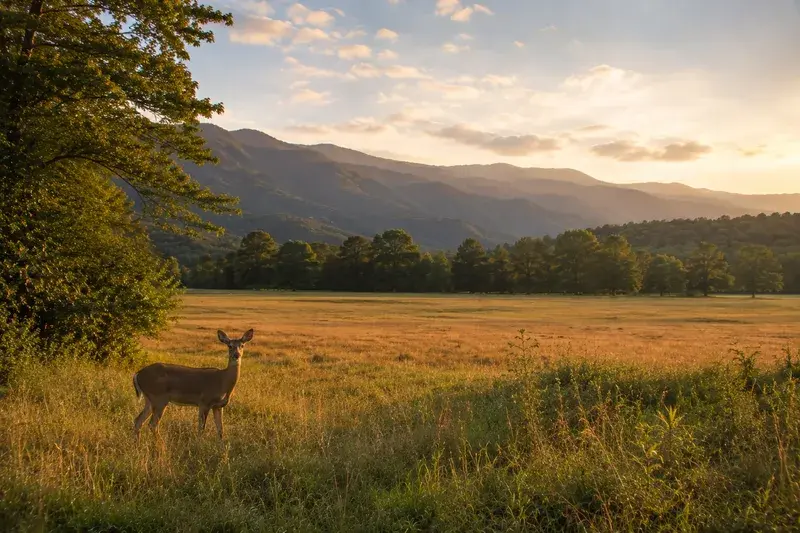
Cades Cove hosts one of the highest concentrations of visible wildlife in the entire national park because the open meadow creates the edge habitat that many species prefer — a transition zone between forest cover and open grazing land. White-tailed deer, wild turkeys, black bears, coyotes, and groundhogs all use the cove's meadows regularly, and the slow one-way traffic loop means animals have largely habituated to cars. The meadows themselves are actively maintained by the park service through mowing and controlled burns — without management, the forest would reclaim them within decades.
Mission 6
Displaced Families
When Great Smoky Mountains National Park was established between 1927 and 1944, over 1,200 people lived in Cades Cove — families who had farmed this valley for four or five generations. Most were forced to sell or had their land condemned, receiving payments that many considered far below fair value, and were relocated to communities outside the park boundary. A small number of elderly residents were granted lifetime leases allowing them to stay until they died, meaning the last original cove resident didn't leave until 1999 — within living memory.
Mission 7
Chestnut Gone
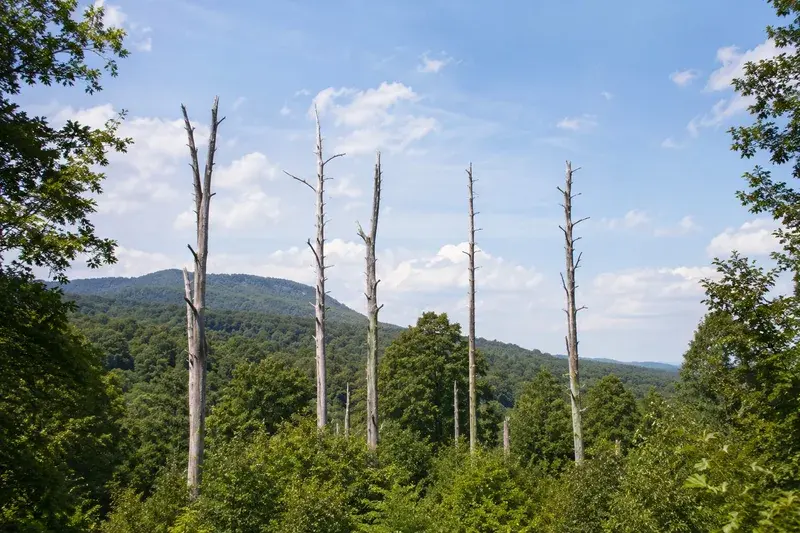
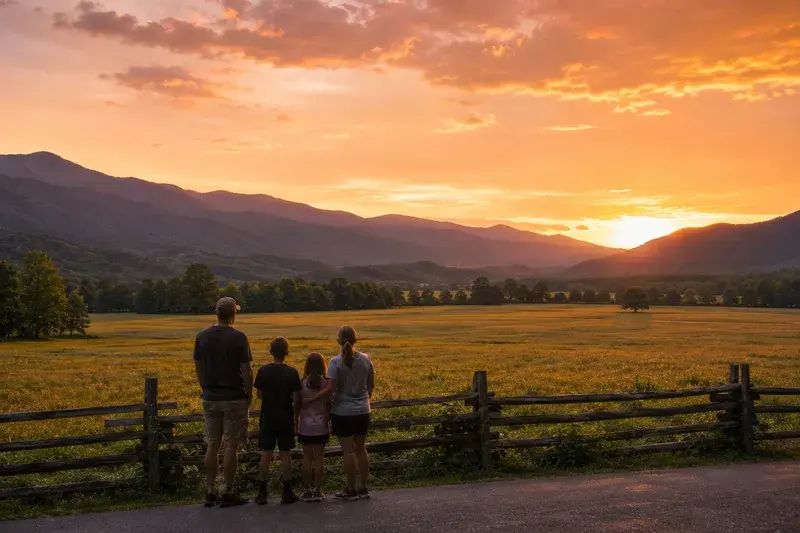
The dead standing trunks visible throughout the cove's forest edges are American chestnut trees — or rather, their remains. A fungal blight introduced from Asia around 1904 killed virtually every mature American chestnut in North America within fifty years, eliminating a tree that had made up roughly one quarter of the entire eastern forest canopy. Chestnut was the most important tree in Appalachian life: its nuts fed wildlife and livestock through winter, its rot-resistant wood built the cabins and fences you've seen on the loop, and its disappearance permanently changed both the forest and the farming economy that depended on it.
Mission 8
Still Coming Back
More than 12 million people visit Great Smoky Mountains National Park every year — more than any other national park in America — and Cades Cove alone draws roughly two million of them. The families who were displaced from this valley kept coming back too: descendants of cove families still gather for reunions at the Primitive Baptist Church cemetery, returning to stand on land their great-grandparents farmed. The loop you've just driven has been walked, ridden, and driven by more people than almost any other road in the American national park system, each one looking for the same thing — a place that still feels genuinely wild.
Play Cades Cove Loop in Adventure Quest.
Cades Cove Loop is one of the adventures in the Smoky Mountains collection, in Adventure Quest for iPhone.
More in Smoky Mountains
Waterfall
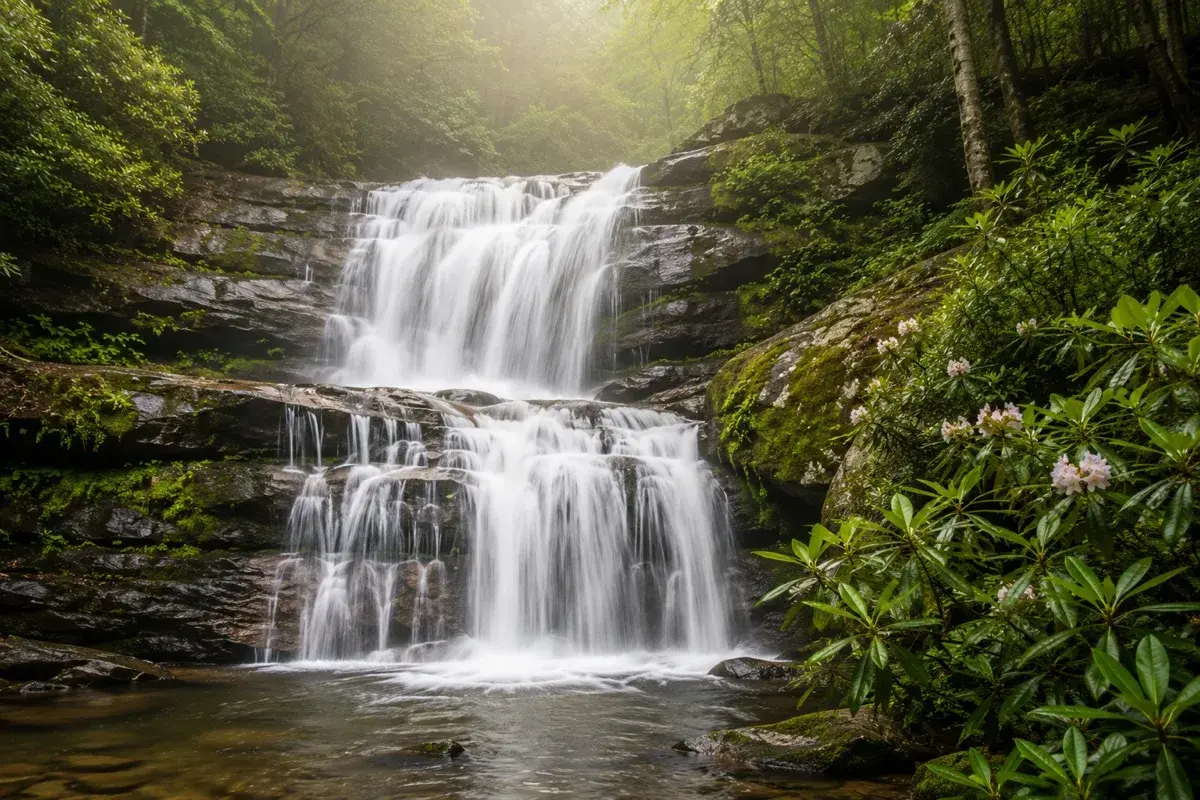
Laurel Falls Explorer
Follow the most popular paved trail in the park to one of its most spectacular waterfalls — 80 feet of cascading water surrounded by old-growth forest.
8 missions · 45-75 min
Summit
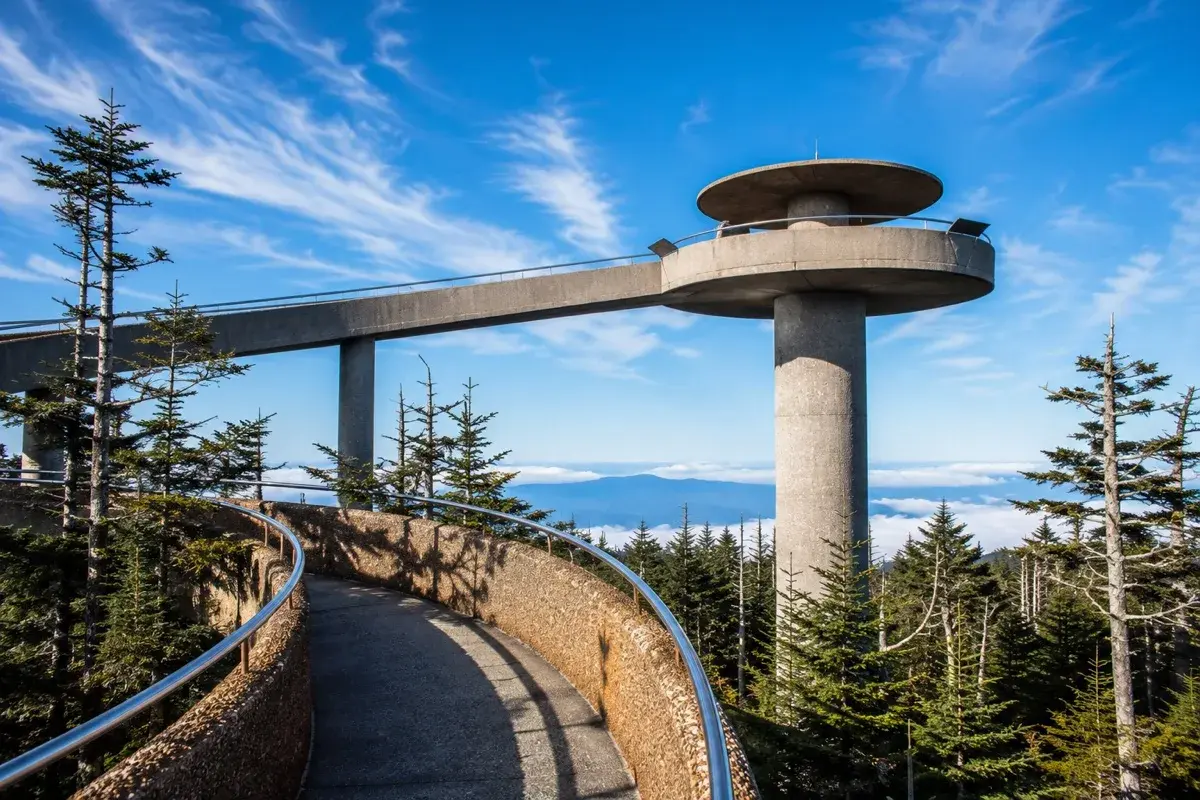
Kuwohi — Top of the Smokies
Climb to the highest point in the park and stand on an observation tower with views into seven states on a clear day.
8 missions · 45-75 min

Overlook · History
Newfound Gap & the Appalachian Trail
Drive the iconic road connecting Tennessee and North Carolina, stop at the Appalachian Trail marker, and stand in two states at once.
8 missions · 45-75 min
Forest · Stream
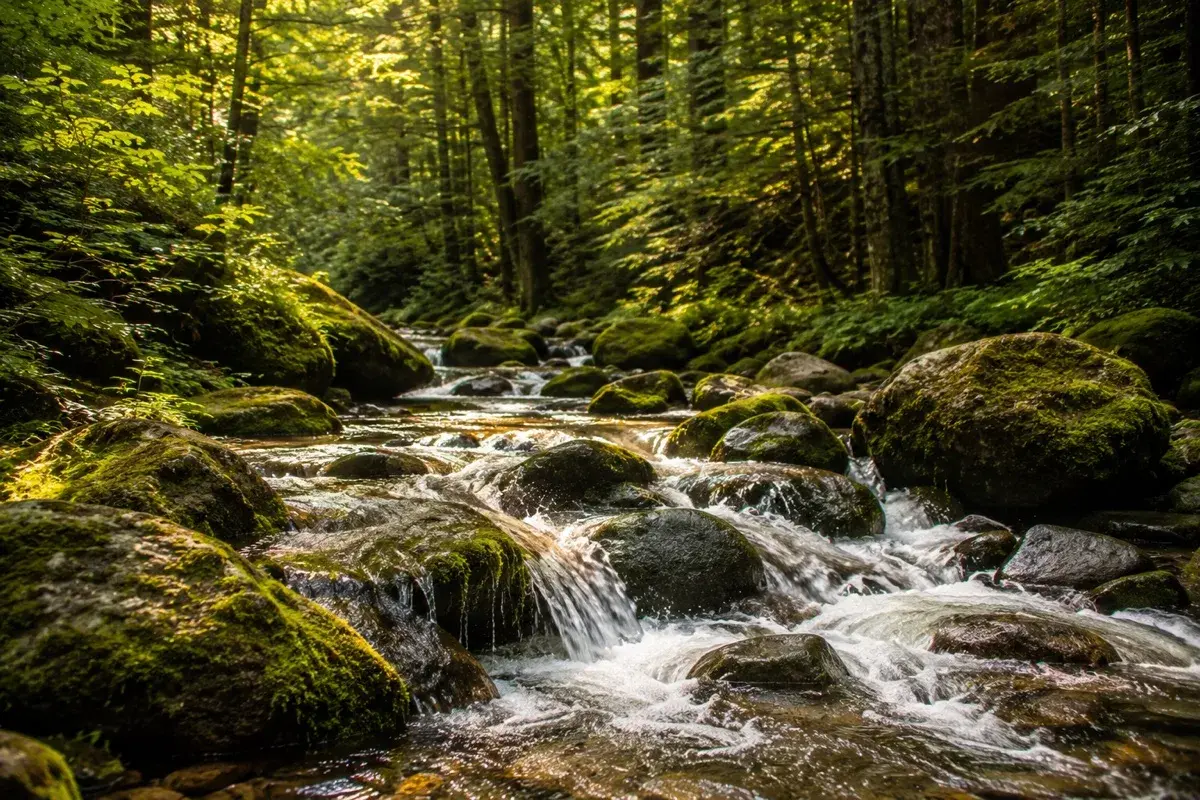
Roaring Fork Motor Nature Trail
Wind through a dense forest canopy past pioneer homesteads and mountain streams on a 5.5-mile scenic drive with a completely different feel from the rest of the park.
8 missions · 45-75 min