Conditions, distances, closures and shuttle dates were checked against the National Park Service on 14 September 2026; sources are listed at the end.
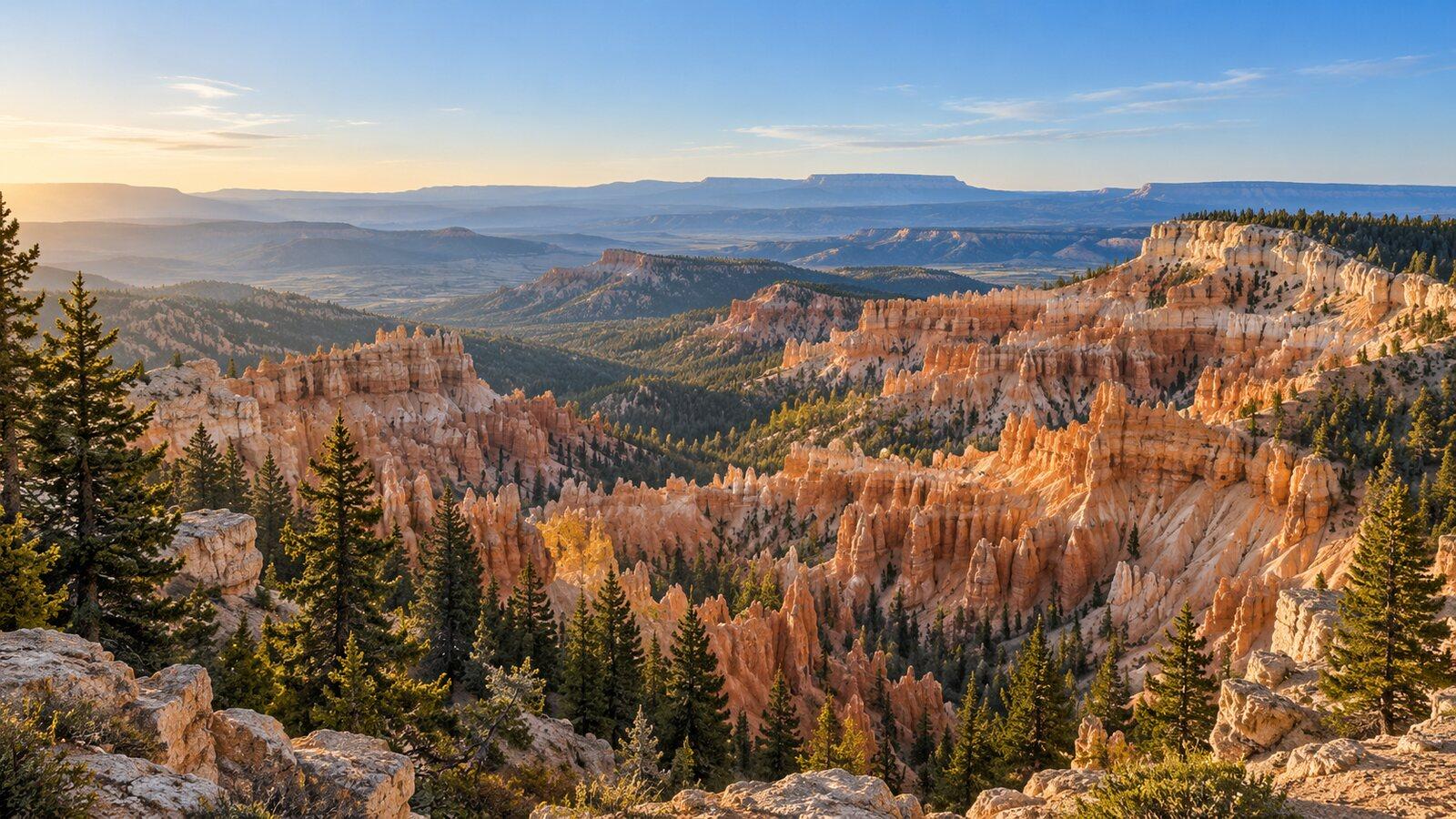
A good Bryce Canyon family day does not require finishing the hardest loop. Begin at the amphitheater rim, let everyone adjust to the elevation, then choose the route that matches the group you actually have that morning. The best plan is a ladder: an easy rim walk, a moderate canyon sample, or the full combination loop. Every rung still delivers the hoodoos.
Choose your effort after you arrive
Three rungs, one amphitheater
| Plan | Route | Distance | Typical time | Best for |
|---|---|---|---|---|
| Easy | Sunset to Sunrise Rim Trail | 1.0 mile | About 1 hour | First views, an altitude check, and lower-energy days |
| Moderate | Queen's Garden out and back | 1.8 miles | 1 to 2 hours | A canyon sample without committing to the full loop |
| Full | Queen's Garden and Navajo combination | 2.9 miles | 2 to 3 hours | Families ready for 625 feet of elevation change — currently routed via the Two Bridges side; see the trail note below |
Distances and times are National Park Service estimates. The park sits at roughly 8,000 to 9,000 feet, so the effort can feel greater than the mileage suggests: the park service puts effective oxygen at about 75% of sea level at 8,000 feet, and its advice is to limit your exertion and turn back before you become tired. Every hike below the rim starts at the top, which means the return is uphill. As the park puts it: going down is optional, but coming back up is mandatory.
A relaxed one-day itinerary
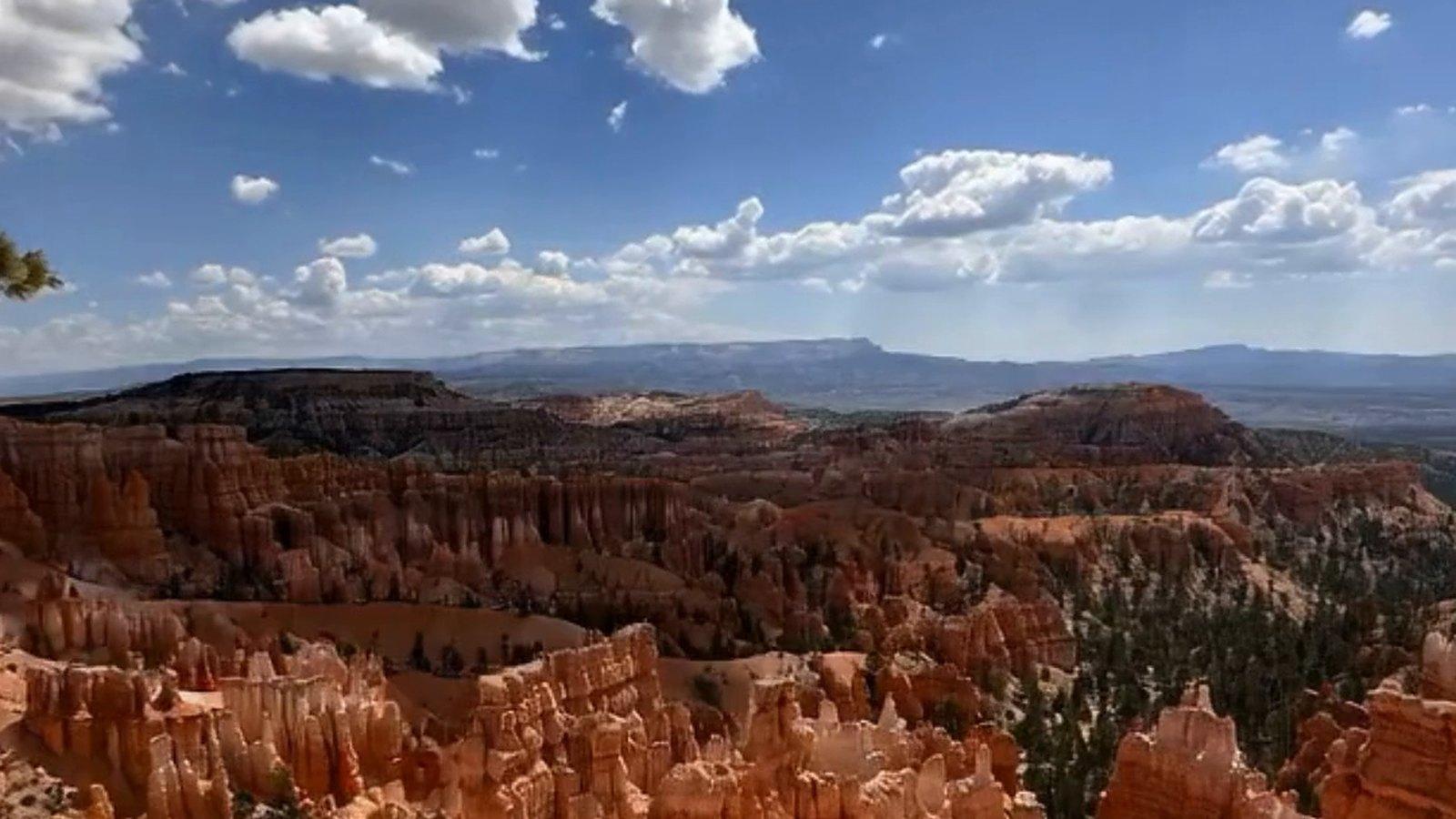
Start at the Bryce Amphitheater and walk the rim between Sunset and Sunrise Points. That short section gives the family the iconic view before anyone commits to a descent, and it doubles as the altitude check.
Then stop deliberately. Have water and a snack, and ask three questions: is anyone dizzy or unusually breathless, are clouds building, and does going down into the canyon still sound exciting? If any answer is wrong, stay on the rim. That is a complete Bryce day, not a failed one.
For the full loop: descend Queen's Garden and climb the Two Bridges side of Navajo Loop. The park recommends the combination in that direction — down from Sunrise Point, up to Sunset Point — so the canyon stays ahead of you rather than over your shoulder, and the steeper section is climbed rather than descended. Close the loop on the Sunset to Sunrise section of the Rim Trail.
Eat after the main walk rather than at the moment everyone is fading. Give the afternoon a lighter shape: the Visitor Center, Junior Ranger work, or a couple of selected overlooks.
If energy remains, take the shuttle or drive to one or two viewpoints rather than stacking another major hike. The goal is to leave with a favorite hoodoo, not with a family mutiny.
Families who want an official park challenge can try Hike the Hoodoos. The requirement is mileage, not medallions: hike at least three miles on the specially marked trails and document the benchmark markers you encounter, either by taking a rubbing or by photographing yourself with them. There are nine markers across eight trails, and finding three of them is not the requirement. Show the rubbings or photographs to a ranger at the Visitor Center for the park's reward.
Sunrise, or a later start
Choose sunrise if your family enjoys early starts and can handle cold, darkness and an immediate schedule; if you want softer light and lower heat; and if everyone can dress in layers and move safely before full daylight.
Choose a later start if sleep matters more than a famous photograph, if young hikers need breakfast and a predictable morning, or if the weather window is better later and the day can stay flexible. Sunrise is beautiful, but it is not required for a successful Bryce day. A rested child at 8 a.m. usually beats a miserable child at dawn.
Altitude, lightning and footwear
Altitude comes first. Start gently, drink water — the park suggests aiming for a gallon a day and avoiding alcohol — and watch for dizziness, headache, muscle aches or nausea. Those are the early symptoms the park service lists, and its instruction is to head for lower elevation as soon as you notice them. Move back down the ladder to an easier plan if anyone feels wrong.
Lightning is the other hazard, and it peaks in exactly the months most families visit: July, August and September. The park's rule is blunt. If you hear thunder, immediately enter a building or hard-top vehicle. Wait at least 30 minutes after the last thunder before returning outside. Thunder means the storm is already within ten miles, and the park names the Rim Trail, the viewpoints and other open areas among the most dangerous places to be — which is to say, exactly where a family with a camera tends to linger.
Wear shoes with real traction. The canyon trails combine steep grades, loose material and switchbacks; the Navajo side reaches a maximum grade of 30%. Carry water and sun protection even when the air feels cool, and expect the temperature to move: morning cold, wind, strong sun and canyon heat can all happen in one day.
Practical notes for parents
The free park shuttle runs 3 April to 18 October in 2026, free with park admission, with buses roughly every fifteen minutes — 8 a.m. to 8 p.m. from 9 May to 20 September, and 8 a.m. to 6 p.m. either side of that. The park recommends it because parking at the viewpoints is limited; park at the Shuttle Station in Bryce Canyon City or the lot across from the visitor center. Confirm the dates for the day you travel.
Restrooms, water availability, trail conditions and Navajo Loop routing all change. Recheck the park's current conditions the evening before and the morning of the visit. Junior Ranger activities and the Visitor Center make strong low-effort backups. And do not climb the hoodoos or leave the designated trail for a better photograph — the formations are fragile and the drop-offs are real.
Take the outing with you
Bryce Canyon Hoodoo Explorer is the Adventure Quest adventure for this park — eight small missions to notice, find and photograph things at the amphitheater itself, six of which finish the adventure. It sits in the Utah NP Explorer collection alongside Capitol Reef Canyon Explorer and Cedar Breaks Overlook Quest, and it is built for use while you are standing there, not before you go.