
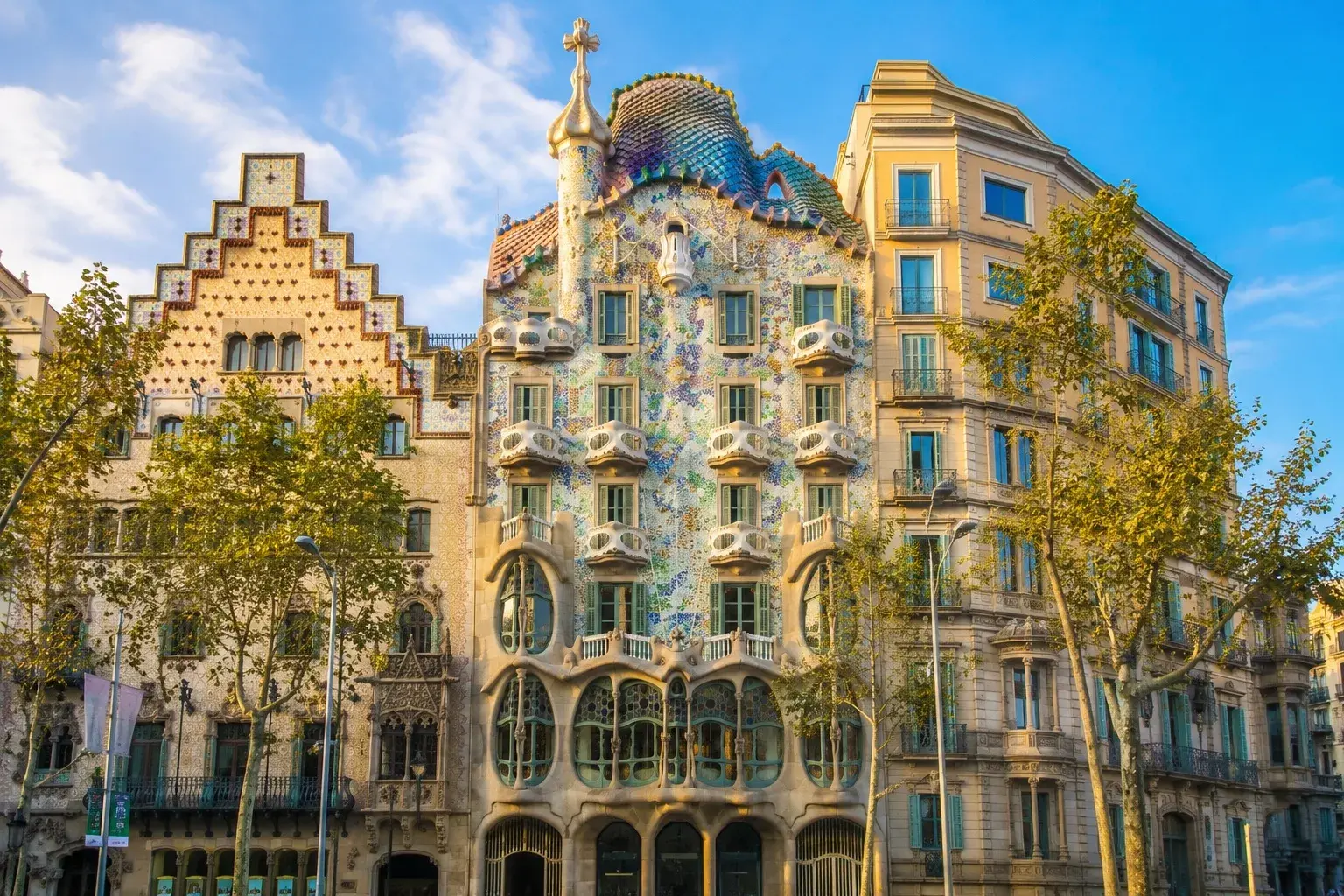
Barcelona · Casa Batlló and Passeig de Gràcia, Barcelona, Spain
Casa Batlló & Passeig de Gràcia Explorer
Walk Passeig de Gràcia through eight missions — the Block of Discord, a dragon's-back roofline, an underwater light well, and the sculptural rooftops of Gaudí's Barcelona.
- 8 missions
- Explore in real life
- Snap the photo
- Learn more if you’re curious
Walk Barcelona's grandest boulevard through eight missions — the world's highest concentration of Art Nouveau architecture, three rival masterpieces on the same city block, a building covered in scales designed to appear to breathe, the dragon's back roofline encoding a national myth, an underwater light well, and the rooftop warriors of La Pedrera that appeared in a James Bond film.
- Where
- Casa Batlló and Passeig de Gràcia, Barcelona, Spain
- Time
- 1.5-3 hours
- Missions
- 8 · complete 6 to finish
- Collection
- Barcelona
- Gaudí
- Modernisme
- Family
What this adventure explores
- Grand Boulevard
- Living Architecture
- National Statement
Missions
8 missions at Casa Batlló & Passeig de Gràcia Explorer
Mission 1
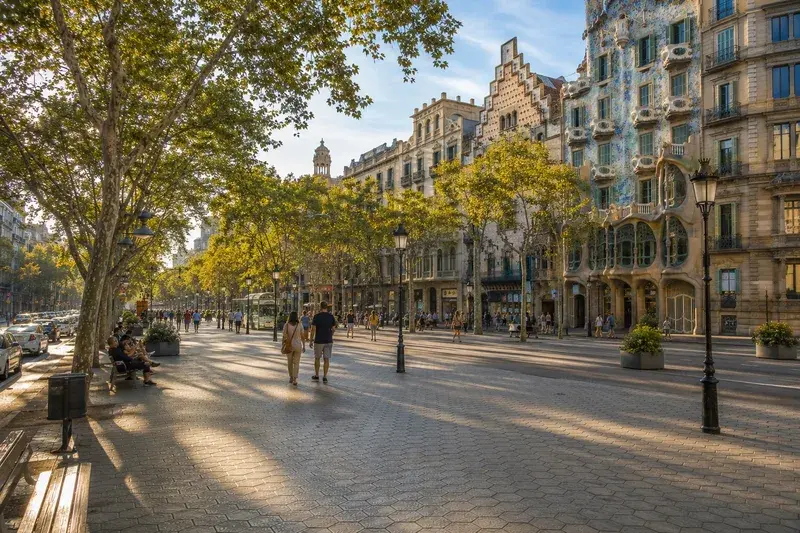
The Grandest Boulevard
Passeig de Gràcia is Barcelona's most elegant boulevard and contains the highest concentration of Art Nouveau architecture on a single street anywhere in the world. The hexagonal paving tiles on the sidewalk, designed by Gaudí for Casa Batlló and now used throughout the city, contain starfish and octopus shapes visible underfoot if you look down while everyone else is looking up.
Mission 2
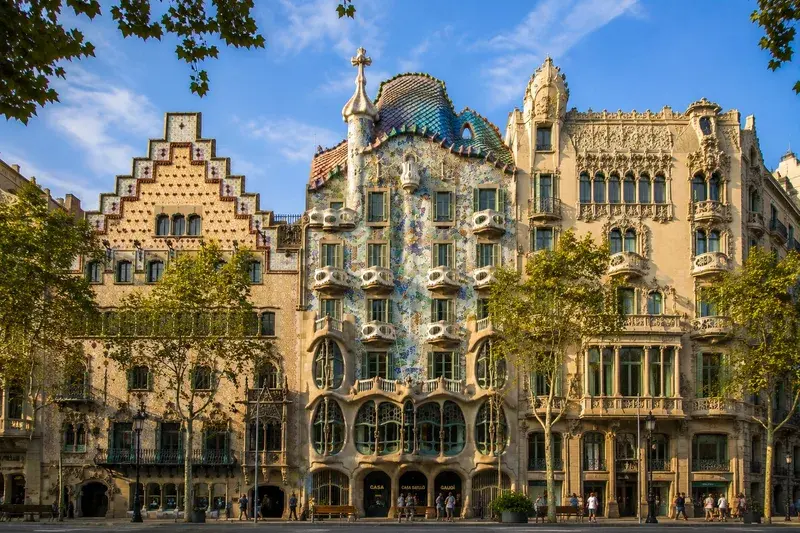
The Block of Discord
One block of Passeig de Gràcia contains three of the most extraordinary buildings in Barcelona — Casa Lleó Morera by Domènech i Montaner, Casa Amatller by Puig i Cadafalch, and Casa Batlló by Gaudí — commissioned within a few years of each other by rival wealthy families who deliberately hired competing architects. The block is called the Manzana de la Discordia — the Block of Discord — because the three buildings represent three completely different visions of what modern architecture should be, all arguing with each other from adjacent plots.
Mission 3
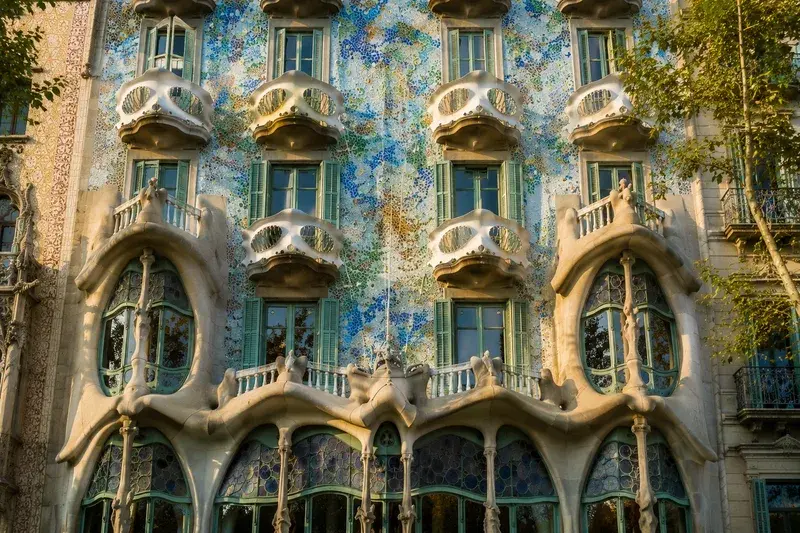
The Bone Facade
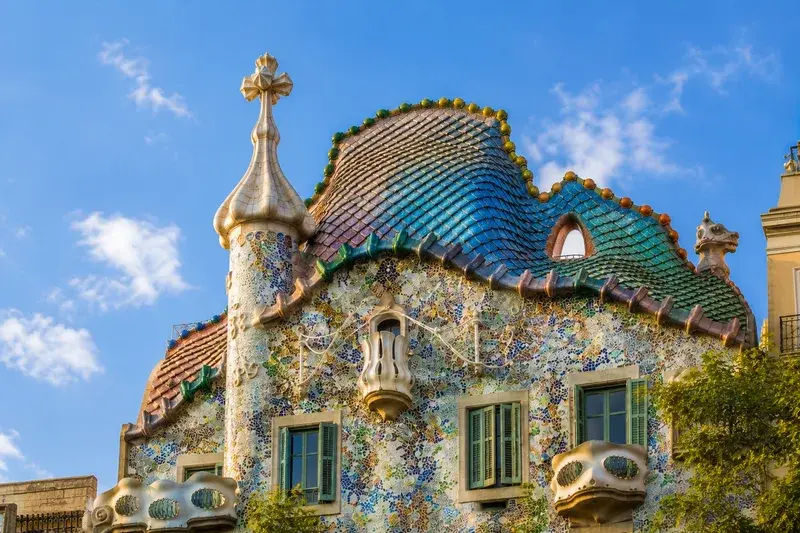
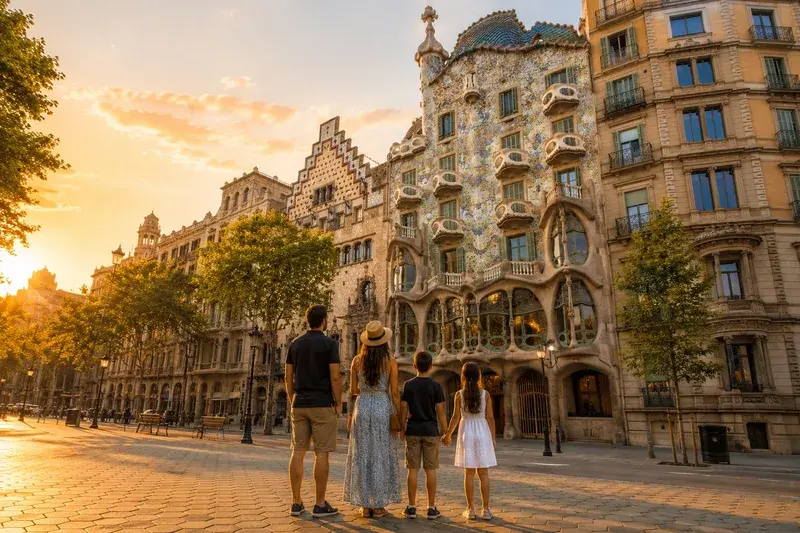
Casa Batlló was renovated by Antoni Gaudí between 1904 and 1906 — he didn't build it from scratch but transformed an existing conventional building into something completely unrecognizable. The facade is covered in a mosaic of broken ceramic tiles in blues, greens, and turquoise that shimmers and changes color as the light moves across it, and the structural columns on the ground floor are shaped like bones — which is why the building is nicknamed Casa dels Ossos, the House of Bones.
Mission 4
The Dragon's Back
The roof of Casa Batlló is covered in ceramic scales in blues, greens, and turquoise that curve in an organic ridge — universally interpreted as the back of a dragon. The entire composition has been interpreted as a representation of the legend of Saint George slaying the dragon — the tower is the knight's lance, the scaly roof is the defeated dragon, and the balconies shaped like skulls are the dragon's victims. Gaudí embedded the national myth of Catalonia into the architecture of a private house without ever explicitly explaining it.
Mission 5
Inside the Dragon
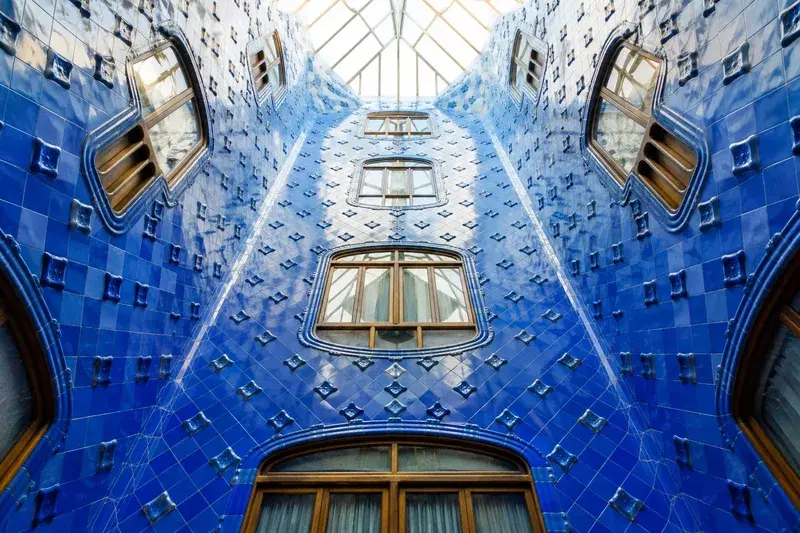
The central light well of Casa Batlló is tiled in a gradient of blues from deep cobalt at the bottom to pale sky blue at the top, creating the illusion of looking up through water toward sunlight. The main staircase spirals upward like a nautilus shell. The building currently operates as a museum and events venue — it is one of the few buildings in the world where you can hold your birthday party inside a UNESCO World Heritage Site.
Mission 6
Casa Milà — La Pedrera
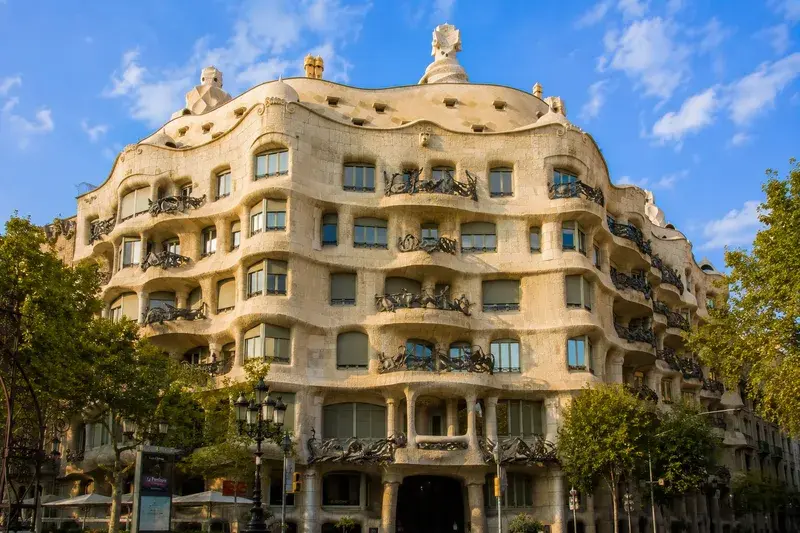
Two blocks up Passeig de Gràcia stands Casa Milà — La Pedrera, the Stone Quarry — Gaudí's last secular building, completed in 1912. The facade is a continuous wave of undulating grey limestone with no straight lines anywhere. The building was so aggressively unconventional that its first residents hung their laundry from the famous iron balconies in protest — they wanted to live in a normal building and found themselves inside a sculpture.
Mission 7
The Rooftop Warriors
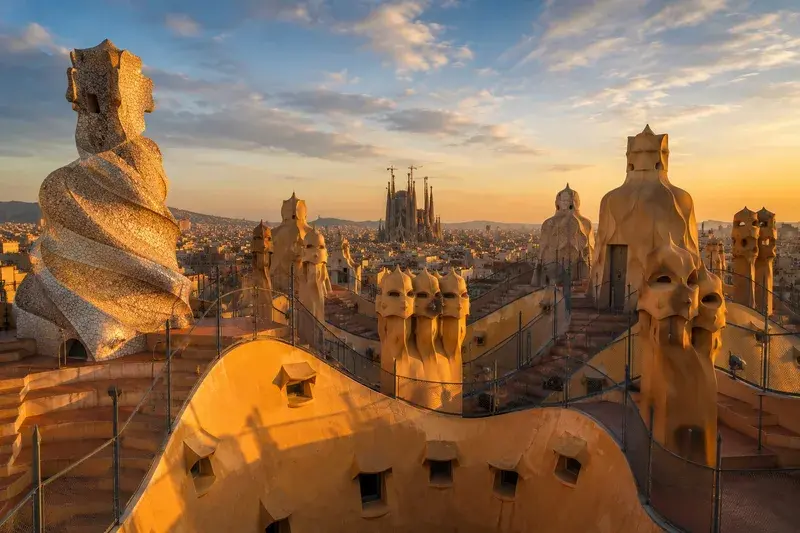
The rooftop of La Pedrera is one of the most photographed spaces in Barcelona — the twisted chimney warriors and helmeted ventilation towers create a landscape that looks like a science fiction film set. Gaudí designed every functional element of the roof as sculptural figures, refusing to separate engineering from art. The rooftop was used as a filming location for the 1984 James Bond film The Spy Who Loved Me — the producers needed a location that looked like nowhere else on Earth.
Mission 8
What Modernisme Left Behind
Catalan Modernisme lasted roughly from 1888 to 1911 — barely 25 years during which Barcelona's wealthy industrialists funded an explosion of architectural ambition that permanently transformed the city. The movement coincided with a period of intense Catalan cultural nationalism — the Renaixença — in which Catalonia was reasserting its distinct identity against Castilian centralism. The extraordinary buildings of Passeig de Gràcia were not just private commissions — they were political statements made in stone and ceramic on the city's grandest street.
Play Casa Batlló & Passeig de Gràcia Explorer in Adventure Quest.
Casa Batlló & Passeig de Gràcia Explorer is one of the adventures in the Barcelona collection, in Adventure Quest for iPhone.
More in Barcelona
Gaudí · Architecture · Family
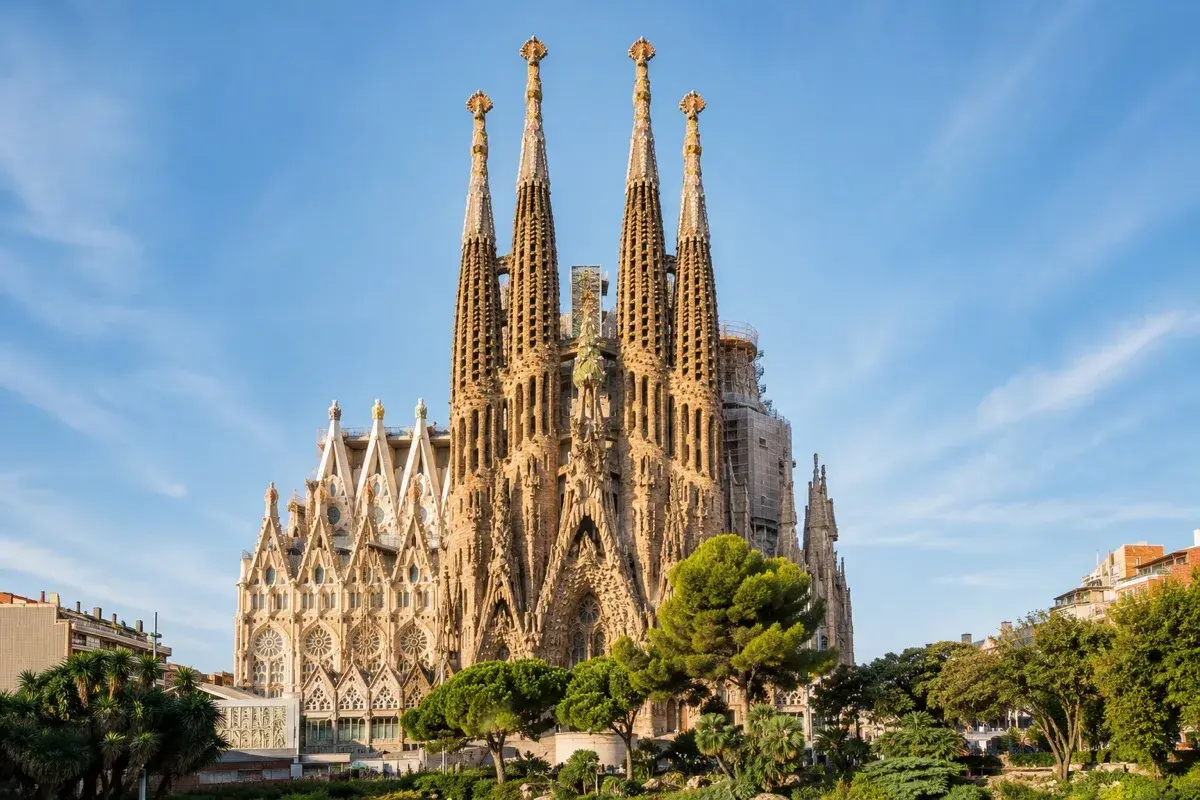
Sagrada Família Explorer
Explore the Sagrada Família — 144 years of construction, a stone forest, a hidden magic square, and the architect buried in the crypt of the building he never saw finished.
8 missions · 1.5-3 hours
City · Highlights · Family
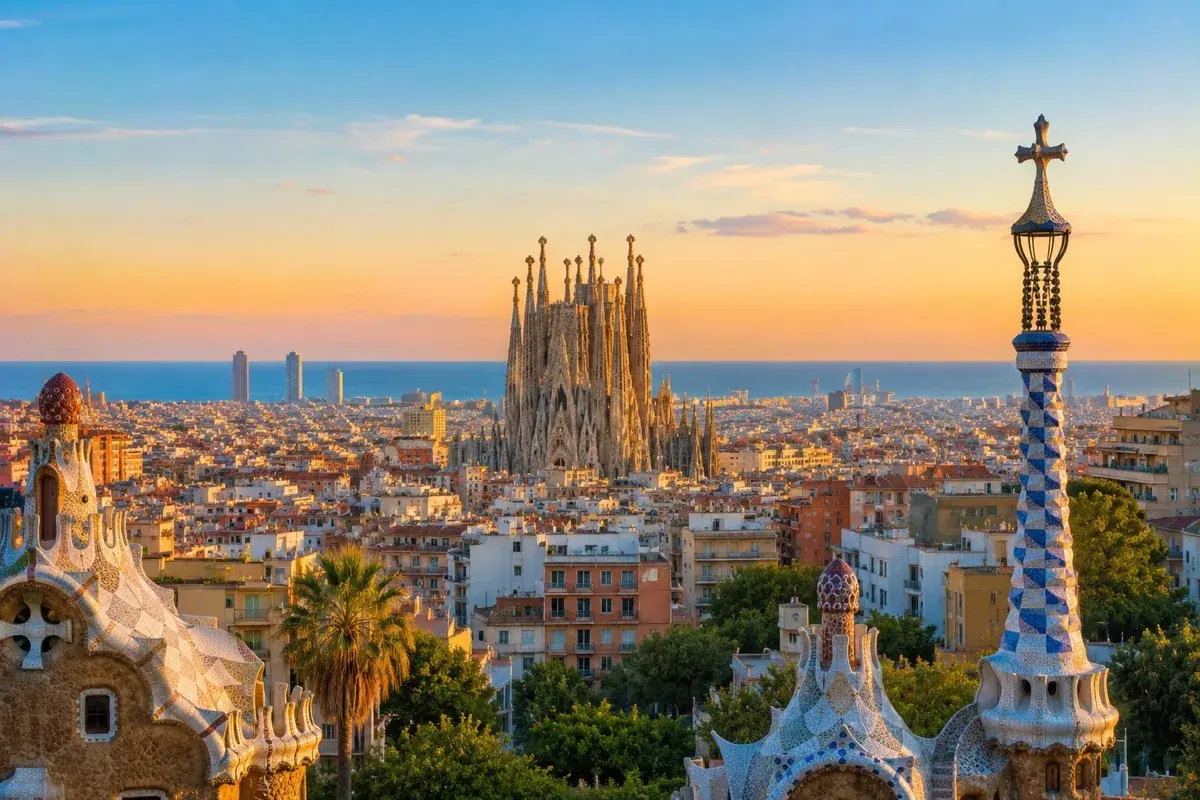
Barcelona Highlights Explorer
Explore the essential Barcelona — Cerdà's grid, Las Ramblas over a stream, Gaudí's failed garden city, the Olympic waterfront, and the locals' secret view from the Bunkers.
8 missions · 2-4 hours
Museum · Art · Family
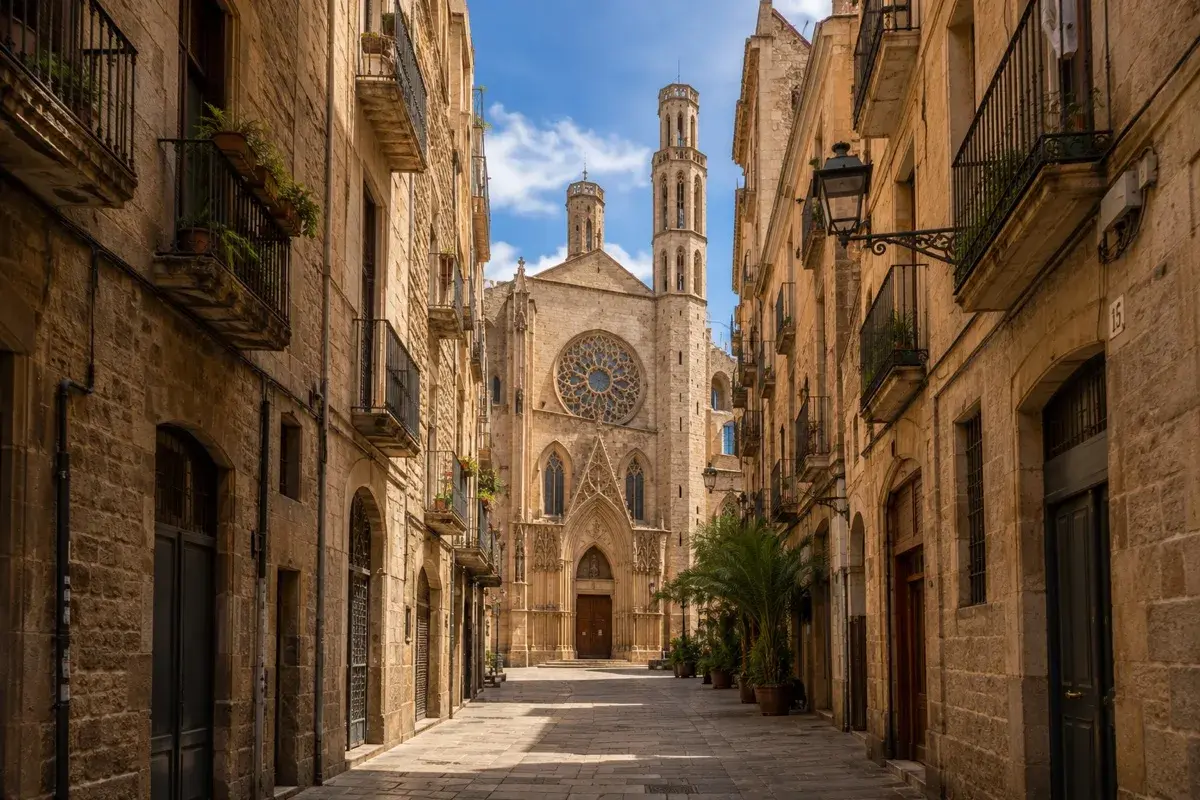
Picasso Museum & El Born Explorer
Explore the Picasso Museum and El Born — five medieval palaces, a 58-painting argument with Velázquez, a buried 1714 neighborhood, and the streets that made Picasso.
8 missions · 1.5-3 hours
History · Medieval · Family
Gothic Quarter Explorer
Navigate 2,000 years of history through the Gothic Quarter — Roman walls, a cathedral of geese, hidden plazas, and streets walked continuously for 80 generations.
8 missions · 1.5-3 hours